
Collagen Benefits: What Science Says in Simple Words

Health and wellness writer focused on evidence-based insights and reader-friendly guides.

If you’re into skincare, you already know collagen is essential for healthy skin. But collagen benefits don’t stop there—from joint comfort to hair health, collagen affects several key areas of your body, whether directly or indirectly.
Let’s break down exactly what collagen does and how you can get the most out of it, based on the latest research.
Quick overview
- What it is: Collagen is the structural protein that holds your body together.
- The drawback: Production naturally drops as you age, leading to visible changes.
- The benefits: Science points to collagen benefiting skin hydration, hair strength, and joint comfort.
- The reality: Supplements can help, but consistency and realistic expectations matter.
- The alternative: You can support your levels naturally through diet and lifestyle changes, though effectiveness may vary.
What is collagen?
Collagen isn’t just one thing; it’s a family of proteins that make up a large part of your skin, bones, muscles, tendons, and ligaments. You can find it pretty much everywhere! In fact, it accounts for about 30% of the total protein in your body and provides structure, strength, and elasticity.

What does collagen do in the body?
One of the benefits of collagen is that it gives your skin, joints, and bones the structure they need to stay strong and healthy. Here’s a quick rundown of its primary roles:
- Provides skin structure: It gives your skin that firm, plump look and feel.
- Supports joint flexibility: It helps your cartilage cushion your joints.
- Strengthens bones: It gives your skeleton a flexible framework to stay resilient.
- Helps build muscles: It makes up a notable portion of muscle tissue.
- Protects organs: It forms protective layers around vital organs.
What happens to your collagen as you age?
Here’s the frustrating part: your body constantly makes and breaks down collagen, but once you hit your mid-20s or early 30s, the balance shifts. You start losing about 1% of your dermal collagen per year. You may notice your skin feeling less springy or your knees getting a little creakier. External factors like UV exposure, pollution, smoking, and high-sugar diets can speed this process up, causing the remaining collagen fibers to become hard, fragmented, and less effective.
What are the benefits of collagen?
So, why should you care about keeping your collagen levels up? The benefits are wide-ranging and affect your body from head to toe. With the right lifestyle choices, you can support your natural collagen stores and slow down visible signs of aging.
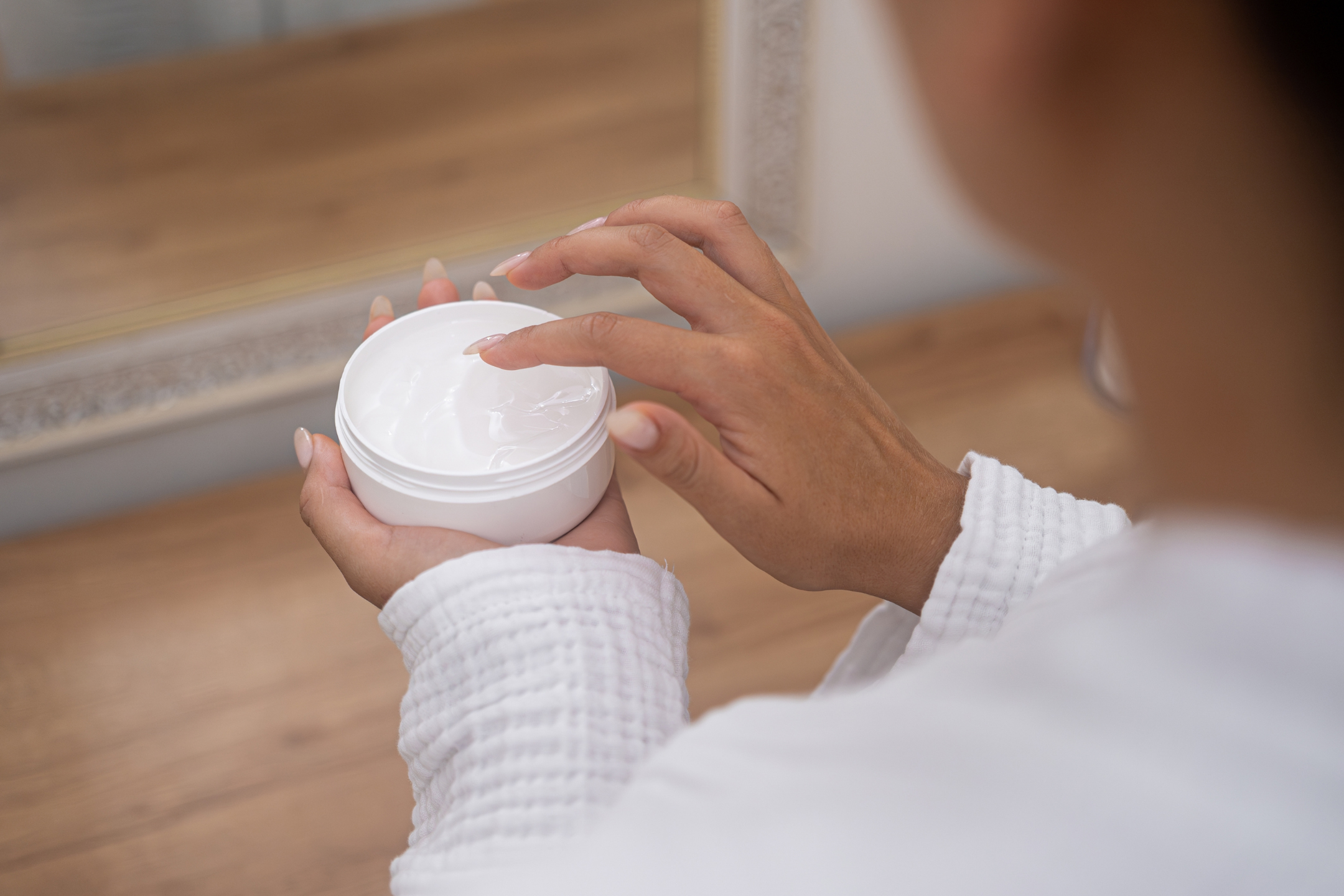
Let’s look at which areas benefit most from healthy collagen levels.
Collagen benefits for skin
For most people, skin is the biggest draw—collagen’s effects are most visible there, especially when levels start to drop. When you have enough of it, your skin holds its shape better and looks smoother overall. As levels dip, you start to see sagging, fine lines, and dryness.
Collagen benefits for joints
If you’re living an active lifestyle (which we should all strive for), the benefits of taking collagen often show up in your joints first. Your cartilage is largely made of collagen, so when that cushion wears thin, stiffness and discomfort usually follow. If declining collagen levels start to affect your mobility, supplementing may be worth considering. Healthy collagen levels may also mean less achiness during activities like walking or working out.
> Quick tip: Always talk to your doctor about supplementation and dosage to create the best personalized care plan.
Collagen benefits for bones
Your bones keep you upright and functional, which may sound straightforward, but they’re more complex than you might think. Their structure gives them the flexibility to handle pressure without snapping. Like most structural tissues, bone density declines with age. Women especially face a higher risk of osteoporosis after menopause because of declining estrogen levels. Some studies show that collagen supplementation, paired with calcium and vitamin D, may be associated with improved bone density.

Collagen benefits for hair and nails
Genetics play a huge role in hair thickness and nail strength, but nutrition matters too. The amino acids in collagen, especially proline, are building blocks for keratin, the protein that makes up your hair and nails. Healthy collagen levels may support faster growth and less breakage, assuming no other underlying issues are at play.
Collagen benefits for muscle health
Up to 10% of your muscle tissue is made of collagen. And as you might expect, muscle mass naturally declines as you age. Collagen supplementation may improve muscle function like strength and recovery, especially when paired with exercise. It’s not a replacement for dietary protein, but it offers targeted support for the connective tissue in your muscles.
Do collagen supplements work?
Yes, but with an asterisk—no supplements can fix poor lifestyle choices. Most studies focus on hydrolyzed collagen and collagen peptides, which are broken down into smaller pieces so your gut has an easier time absorbing them. Once absorbed, these amino acids travel through your bloodstream and signal your body to ramp up collagen production.
Here’s a look at how the science stacks up:
| What | Collagen’s role | Evidence |
|---|---|---|
| Skin | May support elasticity and hydration. | 2024 Study |
| Joints | May reduce discomfort and support cartilage integrity. | 2021 Study |
| Bones | May positively influence structural density. | 2021 Study |
| Muscle | May aid in muscle recovery when paired with exercise. | 2018 Study |
How long does collagen take to work?
Patience is key. You won’t wake up with new skin the day after starting collagen supplements—you’re trying to shift a complex biological process, and that takes time. You might notice subtle improvements in skin texture or joint comfort after 8 to 12 weeks of consistent daily use, but the actual timeline depends on dosage and your overall health. More realistically, expect up to six months of supplementation before tangible changes. So don’t throw in the towel if you don’t see results right away.

Bias in supplementation testing
As you can see, there’s plenty of promising research on the benefits of collagen supplementation. However, most of it wasn’t done by independent researchers, so some bias may be present. To say with certainty whether collagen supplementation has specific effects, more independent research is needed.
How can you increase collagen naturally?
While supplements are a great option in many cases, you can absolutely support your body’s natural collagen production by changing what you put on your plate and how you live your life.
Here’s a step-by-step guide to support your natural collagen production:
- Eat enough protein: Collagen is protein. If you’re not eating enough calories or protein, your body will prioritize survival over beauty. Include eggs, bone broth, poultry, fish, or beans in your meals.
- Prioritize Vitamin C: Vitamin C helps your body synthesize collagen. Citrus fruits, bell peppers, strawberries, and broccoli are your friends here.
- Protect your skin from the sun: UV rays are the number one collagen killer. Seeking shade on a sunny day and wearing a high-quality SPF daily are the best anti-aging moves you can make. Just make sure you scan that SPF so you know it works with your skin type.
- Quit smoking: If you can, cut back on or quit smoking. It depletes collagen and restricts blood flow to your skin, which speeds up visible aging.
- Watch the sugar: Everything in moderation—but high sugar intake can take a toll on your skin’s elasticity over time.

Building these habits won’t just help your collagen levels; it can improve your overall health and quality of life.
Key takeaways
- Fix your diet: Bone broth, eggs, and vitamin C-rich produce give your body the raw materials for its natural collagen production. And watch that sugar intake.
- Use sunscreen: No amount of supplementation beats effective daily UV protection.
- Consistency is key: Expect to wait at least 8 to 12 weeks (realistically, up to six months) before noticing improvements in skin texture or joint comfort.
- Pair with protein and exercise: Collagen supplementation works best when your overall protein intake is solid and you’re staying active.
- Beware the bias: There’s plenty of research on collagen supplementation; unfortunately, not enough of it is independent.
- Check with your doctor: Personalized care is invaluable, especially if you’re pregnant, nursing, or managing a chronic condition.
FAQ
Is collagen safe for everyone?
For most adults, collagen supplements are considered safe and well-tolerated. That said, if you have a chronic condition, are pregnant, or take specific medications, it’s always smart to check with your doctor first.
Does collagen have any side effects?
Most people tolerate collagen supplements well. If you do experience side effects, they’re usually mild and digestion-related (think heartburn or an unpleasant aftertaste). Starting with a smaller dose often helps, and checking with your doctor helps even more.
Does collagen affect your skin from the inside out?
Yes. For your skin, ingestion is really the only way supplemental collagen works. Topical treatments are far less effective. They might hydrate your skin, but they won’t affect your actual collagen levels. Ingested collagen, on the other hand, breaks down into amino acids and peptides your body can actually use.


-
1.
Collagen supplementation and regenerative health: advances in biomarker detection and smart material integration. (2025). https://pmc.ncbi.nlm.nih.gov/articles/PMC12739960/#sec1
-
2.
Collagen supplementation for skin and musculoskeletal health: An umbrella review of meta-analyses on elasticity, hydration, and structural outcomes. (2026). https://pmc.ncbi.nlm.nih.gov/articles/PMC12968778/#abstract1
-
3.
Solar ultraviolet irradiation reduces collagen in photoaged human skin by blocking transforming growth factor-β type II receptor/smad signaling. (2004). https://pmc.ncbi.nlm.nih.gov/articles/PMC1618600/#abstract1
-
4.
Smoking affects collagen synthesis and extracellular matrix turnover in human skin. (2002). https://pubmed.ncbi.nlm.nih.gov/11966688/
-
5.
The effects of collagen peptide supplementation on body composition, collagen synthesis, and recovery from joint injury and exercise: a systematic review. (2021). https://pmc.ncbi.nlm.nih.gov/articles/PMC8521576/#Sec25
-
6.
A comprehensive review on postmenopausal osteoporosis in women. (2023). https://pmc.ncbi.nlm.nih.gov/articles/PMC10711335/#abstract1
-
7.
Efficacy of collagen peptide supplementation on bone and muscle health: a meta-analysis. (2025). https://pubmed.ncbi.nlm.nih.gov/41049371/
-
8.
Assessing muscle protein synthesis rates in vivo in humans: The deuterated water (2H2O) method. (2024). https://www.sciencedirect.com/science/article/pii/S0022316624010290
-
9.
Efficacy of collagen peptide supplementation on bone and muscle health: a meta-analysis. (2025). https://pubmed.ncbi.nlm.nih.gov/41049371/
-
10.
Effects of 24 weeks of collagen supplementation in active adults: Impact on body composition, neuromuscular and cardiorespiratory fitness. (2025). https://pmc.ncbi.nlm.nih.gov/articles/PMC12314484/#sec5
-
11.
A clinical trial shows improvement in skin collagen, hydration, elasticity, wrinkles, scalp, and hair condition following 12-week oral intake of a supplement containing hydrolysed collagen. (2024). https://www.google.com/url?q=https://onlinelibrary.wiley.com/doi/10.1155/2024/8752787&sa=D&source=docs&ust=1787817389357266&usg=AOvVaw1l0ZQNcbeWU3RLJspB3qYs
-
12.
The effects of collagen peptide supplementation on body composition, collagen synthesis, and recovery from joint injury and exercise: a systematic review. (2021). https://pmc.ncbi.nlm.nih.gov/articles/PMC8521576/#Sec25
-
13.
The effects of collagen peptides on muscle damage, inflammation and bone turnover following exercise: a randomized, controlled trial. (2018). https://www.researchgate.net/publication/331225192_The_effects_of_collagen_peptides_on_muscle_damage_inflammation_and_bone_turnover_following_exercise_a_randomized_controlled_trial
-
14.
Efficacy of vitamin C supplementation on collagen synthesis and oxidative stress after musculoskeletal injuries: A systematic review. (2018). https://pmc.ncbi.nlm.nih.gov/articles/PMC6204628/#section14-2325967118804544
-
15.
A short-term high-sugar diet is an aggravating factor in experimental allergic contact dermatitis. (2023). https://pmc.ncbi.nlm.nih.gov/articles/PMC10682547/#sec1