Mandelic Acid vs Lactic Acid: How to Pick the Right One

Health and wellness writer focused on evidence-based insights and reader-friendly guides.
You might find yourself standing in front of two AHA serums and thinking, “Mandelic acid vs lactic acid: which should I choose?”
In this guide, they’ll go head-to-head on exfoliation speed, gentleness for sensitive skin, and results for acne-prone skin. We’ll also tell you which one to start with if you’re new to the acid game.
Quick Overview
- What they are: Mandelic acid comes from bitter almonds and has a larger molecule that absorbs more slowly; lactic acid is a milk-derived AHA and part of the skin’s natural moisturizing factor.
- The difference: Mandelic acid exfoliates more gently and gradually; lactic acid exfoliates faster while also hydrating.
- The timeline: Lactic acid tends to show results sooner; mandelic acid takes a bit longer, especially at lower strengths.
- When to use them: Both work best in the evening, with sunscreen applied the next morning.
- Combining them: Many routines use both, often in the same product. When using separate products, avoid pairing lactic acid above 8% with mandelic acid unless a doctor approves.
What Is Mandelic Acid?
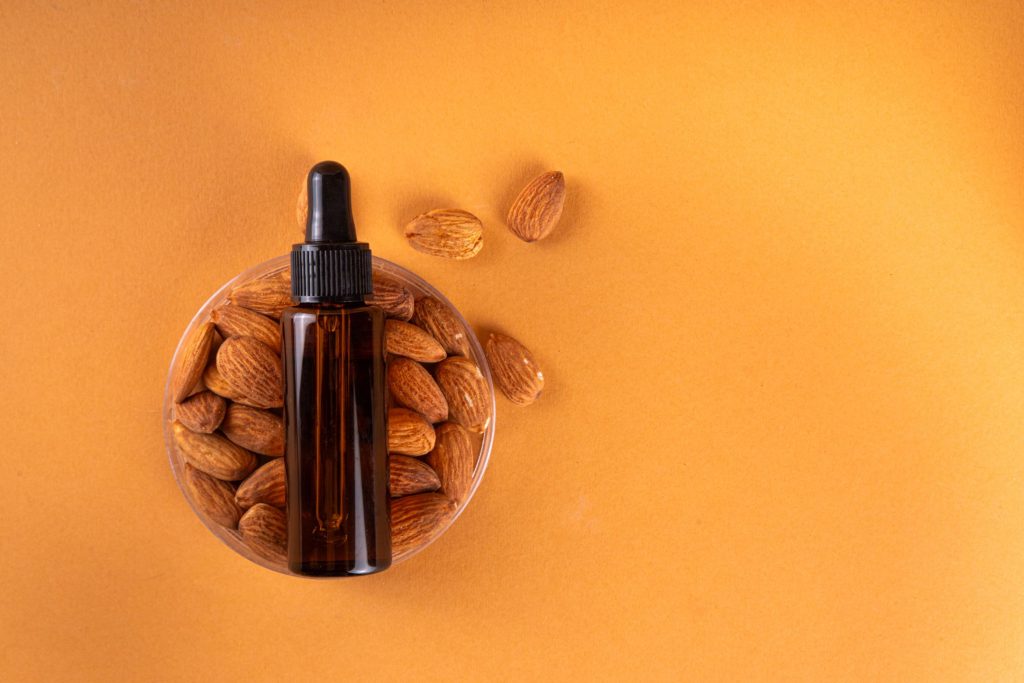
Mandelic acid is an AHA (alpha hydroxy acid) originally derived from bitter almonds (“mandel” means “almond” in German). Today, you can find it in serums, toners, and creams at up to 10%, which is considered safe for cosmetic use. It improves texture, exfoliates dead skin cells, and supports acne-prone skin.
Mandelic acid is a great starting point if you’re new to acids. Its molecules are bigger than those of lactic or glycolic acid, so it penetrates the skin more slowly and irritates less.
Keep in mind, though, that like any AHA, its strength and irritation risk equally depend on both concentration and pH. The higher the percentage and the lower the pH, the stronger the effect and the greater the risk of irritation.
This acid is also well suited to deeper skin tones, which are more prone to dark marks from harsher acids. That’s because mandelic acid spares melanin-producing cells and gently slows tyrosinase, the enzyme that drives melanin production.
Apply it in the evening and don’t skip sunscreen: even a gentleman like mandelic acid can increase sun sensitivity!
What Is Lactic Acid?
In ancient times, Cleopatra bathed in sour milk to make her skin look younger. Lactic acid was first extracted from milk much later—in 1780. Today, it’s produced synthetically and is a common AHA known for its exfoliating properties.
Lactic acid is also naturally found in your skin as part of the natural moisturizing factor (NMF), along with amino acids, urea, and other compounds that keep skin hydrated and elastic.
It’s a true multitasker: lactic acid exfoliates (at concentrations above 8%), hydrates, evens out skin tone, reduces pigmentation, and supports the skin’s own defenses.
Add it to your evening routine, but if you have rosacea, hit up your dermatologist first. One rule everyone should keep in mind: don’t layer lactic acid products above 8% with other acids, retinol, or other irritating ingredients, unless your doctor prescribed it. And make sure to put sunscreen on in the morning.
Mandelic Acid vs Lactic Acid: Key Differences
Let’s get our detective caps on and find out what mandelic and lactic acid do best. You’ll learn which one exfoliates more effectively, which is better for acne-prone skin, and which is gentler.
Which Acid Exfoliates Faster?
Lactic acid takes this one.
Under the same conditions (the same percentage and pH), it exfoliates more strongly than mandelic acid. It’s more hydrophilic, so it moves through the skin’s water channels, penetrating deeper and working faster. That speed comes at a cost, though: a higher risk of irritation.
Mandelic acid works more slowly, partly because its larger molecule takes longer to absorb. It’s also gentler, since it’s more lipophilic: it moves through the skin’s lipid structures instead of pushing straight to deeper layers.
All in all, go with lactic acid for fast, visible exfoliation, especially for hyperpigmentation or rough texture. Choose mandelic acid for gentle, gradual renewal with a lower risk of irritation. It’s a better fit for sensitive or pigmentation-prone skin, though results take longer to show.
Which Acid Suits Dry or Dehydrated Skin Better?
For dry or dehydrated skin, lactic acid is usually the belle of the ball. It’s a natural part of the skin’s NMF, a mix of compounds that helps retain moisture, so it hydrates while it exfoliates.
This isn’t just theory, either. A six-week study compared several acids, including glycolic, citric, and malic acids, and found that lactic acid and glycolic acid were the most effective at improving moisture. Plus, lactic acid caused fewer complaints and less irritation than glycolic acid, even at higher concentrations.
For mandelic acid, we couldn’t find research measuring hydration as an outcome. So if you’re using this active and want hydration too, add something made for the job: hyaluronic acid, squalane, or ceramides.
Which Acid Fights Acne More Effectively?
Both have research behind them.
In one lactic acid study, 22 people used a 5% lactic acid lotion daily for a year. By the end, over 40% of participants saw a 90-100% reduction in inflammatory breakouts, meaning their breakouts were nearly or completely gone.
Mandelic acid helps with acne in several ways, according to acne.org: it exfoliates, reduces excess oil production, has antibacterial properties against C. acnes, and helps fade the dark marks acne leaves behind. Like most AHAs, it works best paired with a dedicated acne treatment rather than used alone.
At professional peel strengths, which are much higher than what you’d find in a serum, a 45% mandelic acid peel worked just as well as a 30% salicylic acid peel for mild-to-moderate acne over 12 weeks. Plus, participants found it easier on their skin.
Which Acid Is Safer for Sensitive Skin?
There is no clear winner here.
How strong a product is and how likely it is to irritate your skin depend on more than the acid itself.
This goes for any AHA, including mandelic and lactic acid. Molecule size and percentage matter, but so does pH. A higher percentage (for example, 10-20%) exfoliates more intensely, but it also comes with a higher risk of irritation. That’s why judging a product by its percentage alone will never give you the full picture.
Mandelic Acid vs Lactic Acid at a Glance
| Mandelic acid | Lactic acid | |
|---|---|---|
| Source | Derived from bitter almonds | Derived from milk |
| Penetration | Slower due to larger molecule size | Faster due to smaller molecule size |
| Hydration | Minimal on its own | Strong; part of the skin’s NMF |
| Exfoliation | Gentle, gradual | Stronger, faster |
| Best known for | Gentle exfoliation, lower irritation risk | Hydration, even skin tone, reduced pigmentation |
| Sunscreen required | Yes | Yes |
Can You Use Mandelic Acid and Lactic Acid Together?
You don’t have to pick a lane.
In fact, you’ll often find mandelic acid and lactic acid in the same product on the shelf—and for good reason: together, they effectively exfoliate, brighten skin, and smooth texture.
If you decide to combine them yourself using separate products, don’t use lactic acid above 8% at the same time as mandelic acid or any other acid unless your doctor gives you the green light. And whichever way you go, save these acids for your evening routine, then greet the morning with sunscreen.
Key Takeaways
- Lactic acid exfoliates more strongly and faster; mandelic acid works more slowly and gently.
- Lactic acid is usually better suited to dry or dehydrated skin. If you use mandelic acid and want extra hydration, pair it with a moisturizing ingredient.
- Both have research behind them for acne: lactic acid from a year-long lotion study and mandelic acid largely from professional peels.
- They often come in the same product; if you’re using them separately, don’t mix lactic acid above 8% with mandelic acid unless your doctor says it’s fine.
FAQ
Which Is Better for Beginners, Lactic or Mandelic Acid?
If you’re just starting out with acids, mandelic acid is usually the friendlier choice: its slow absorption means less chance of overdoing it. Lactic acid can work well for beginners too; just start with a lower concentration and give your skin time to adjust.
Which Skin Types Should Avoid Lactic or Mandelic Acid?
If you have rosacea, get the go ahead from your dermatologist before using lactic acid. Mandelic acid doesn’t come with that same caution and is generally gentler on sensitive skin, thanks to its slow absorption.
Do You Need Sunscreen When Using Mandelic or Lactic Acid?
Yes, with both. AHAs can make skin more sun-sensitive, so daily broad-spectrum SPF is a must whether you apply lactic acid or mandelic acid.


-
1.
Mandelic acid: INCI Ingredient. (2025.) https://www.specialchem.com/cosmetics/inci-ingredients/mandelic-acid
-
2.
Comparative effectiveness of alpha-hydroxy acids on skin properties. (1996.) https://pubmed.ncbi.nlm.nih.gov/19245467/
-
3.
Long term topical application of lactic acid/lactate lotion as a preventive treatment for acne vulgaris. (2002.) https://ijdvl.com/long-term-topical-application-of-lactic-acid-lactate-lotion-as-a-preventive-treatment-for-acne-vulgaris/
-
4.
How mandelic acid helps with acne. (2026.) https://www.acne.org/how-mandelic-acid-helps-with-acne
-
5.
Comparative study of efficacy and safety of 45% mandelic acid versus 30% salicylic acid peels in mild-to-moderate acne vulgaris. (2019.) https://onlinelibrary.wiley.com/doi/10.1111/jocd.13168