How to Get Thicker Hair: What You Can Realistically Achieve

Your guides through the skincare chaos

Before we dive into how to get thicker hair using simple but effective (and some a little less simple but still effective) methods, there are two important things you need to keep in mind.
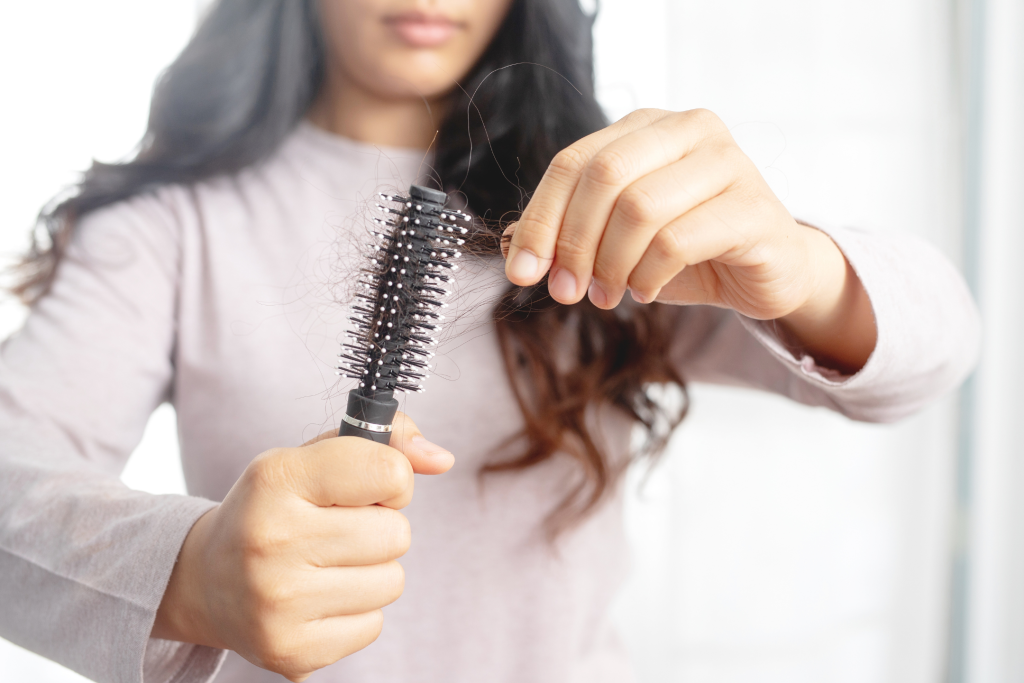
First, the thickness of your hair is largely determined by your genetics. You won’t be able to manifest any hair follicles where there weren’t any to begin with. Fortunately or unfortunately, you’ve got to work with what you were born with. However, if you noticed that your hair seems thinner than it used to be, there are absolutely ways for you to get it back.
This brings us to the second point, which is that regrowing hair takes time. We’re talking several months to a year to notice the first results, and any product claiming visible improvement within weeks is most likely a scam.
Now, let’s get to how to grow thicker hair.
Understanding hair growth
Any attempts to increase hair density begin with your scalp. Your hair, as you may have noticed, is attached to your head, which makes your scalp the source of almost every issue your hair could be facing.
Each follicle cycles through a growth phase (anagen), a short regression or transition (catagen), and a rest phase (telogen) before the hair sheds (exogen) and the cycle begins anew. The goal is to extend the active growth phase of as many hair follicles as possible. Many things play a role here, including your diet, blood flow to your scalp, and your stress levels.
Can diet make hair thicker?
Potentially, if you eat the foods that specifically help hair health. See, your hair is primarily made of protein, so that’s the first thing you want to add to your meals. We’re talking eggs, fish, lentils, and chicken.

There are other important elements to keep in mind, like iron. Your body uses it to deliver oxygen to your follicles. Zinc supports hair tissue recovery and growth. Biotin helps convert food into cellular energy, which in turn helps produce the amino acids and proteins your hair needs. Omega-3 fatty acids from walnuts and salmon keep your scalp hydrated and healthy.
If this is too many changes at once, you can always look into nutritional supplementation.
Before trying any new treatment or taking supplements, it’s always a good idea to schedule an appointment with your doctor to get personalized advice and figure out what caused your hair to become thinner for a more effective approach.
Natural topical remedies
“Natural” doesn’t always equal “better.” However, some natural products do have impressive research behind them. Let’s break down the effect of the most popular natural hair growth remedies:
- Rosemary oil
- Peppermint oil
- Aloe vera
Rosemary oil
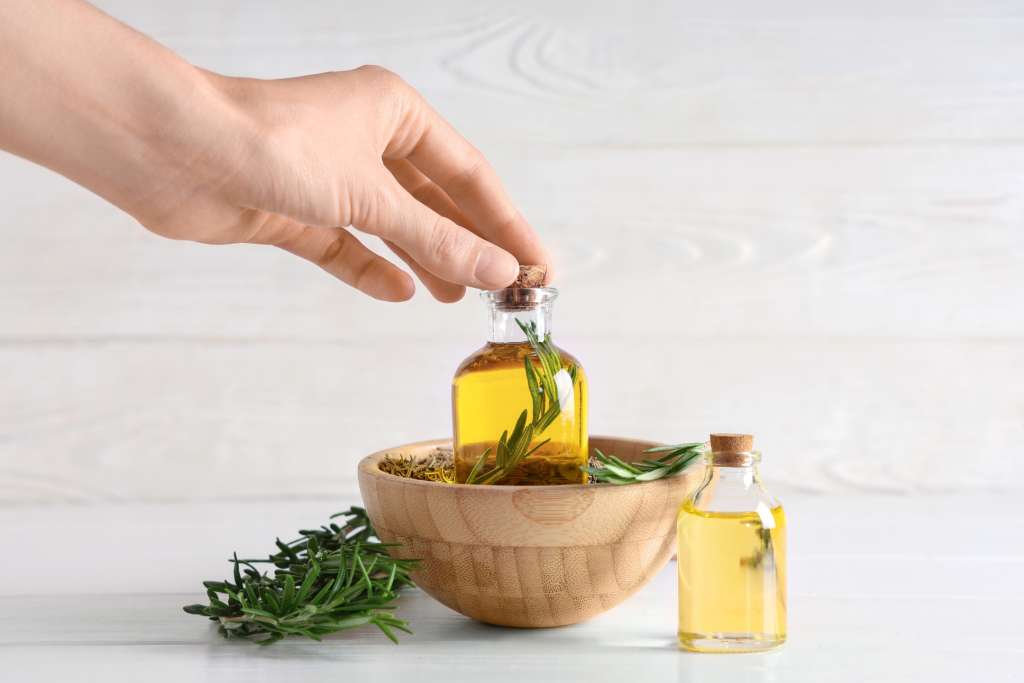
Rosemary oil is one of the most well-researched natural hair growth remedies. A popular study suggests rosemary oil comes close to 2% minoxidil (the active ingredient in Rogaine) in increasing hair count after 6 months of use, with the added benefit of causing less scalp itching for participants. While not the strongest hair growth remedy out there, it’s definitely worth looking into.
Peppermint oil
While there’s an unfortunate lack of definitive clinical evidence of peppermint oil’s effectiveness for human hair loss, there’s enough anecdotal evidence, as well as studies conducted on mice, that show promising results. It makes sense when you think about it: peppermint oil’s menthol, when applied to the scalp, can improve blood flow, which can then stimulate hair growth.
Aloe vera
Aloe vera gel can reduce irritation, flakiness, and inflammation. While it doesn’t contribute to hair growth directly, it helps create a healthy environment for your hair to thrive in. It’s no wonder aloe vera is so popular in skincare and hair care, with studies backing up its effectiveness.
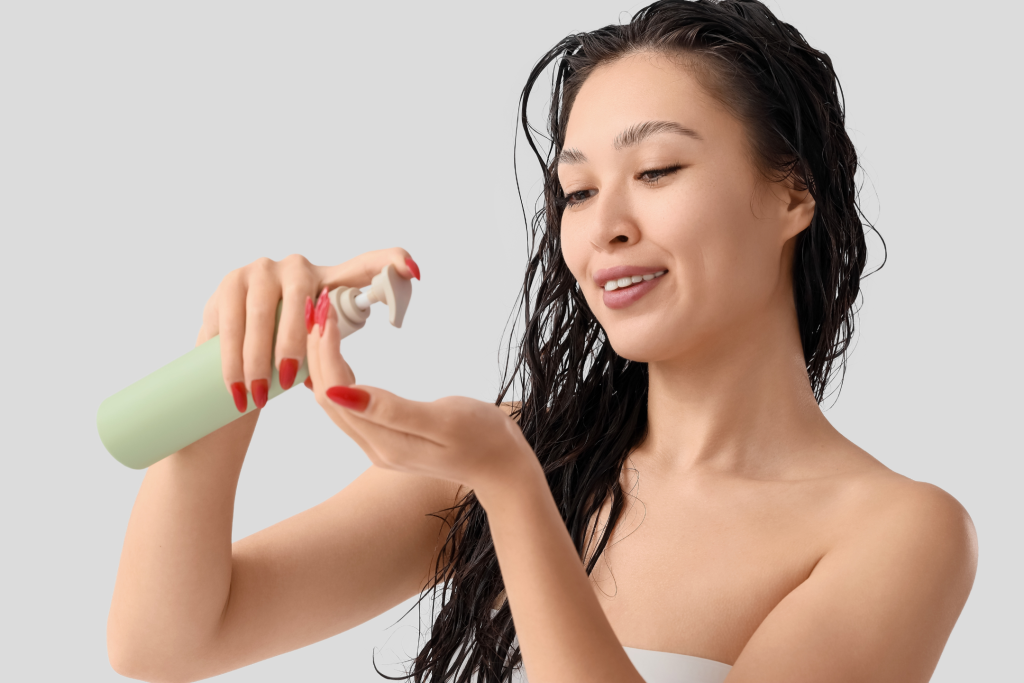
Bonus tip: Applying aloe gel as a 20-minute pre-wash mask once a week can help if your skin is prone to inflammation. Remember to scan any new product to make sure it’s compatible with your skin type.
The art of the scalp massage
The single most underappreciated and effective tool for anyone who wants to know how to get thicker hair is the scalp massage. And it’s not just a quick scratch; we’re talking a deliberate practice to wake up your hair follicles. Regular massage boosts circulation and helps relieve tension, which is important because stress is one of the major contributors to hair loss.
Additionally, massaging your scalp after applying a topical treatment can increase its effectiveness by pushing topical treatments deeper into the skin and, again, increasing blood flow to deliver more active ingredients to your hair follicles.
Keep in mind that if you’re looking into how to get thicker hair, and not just a new pleasant pastime, your fingers won’t be enough. Use a dedicated scalp massager, either a manual or an electric one.
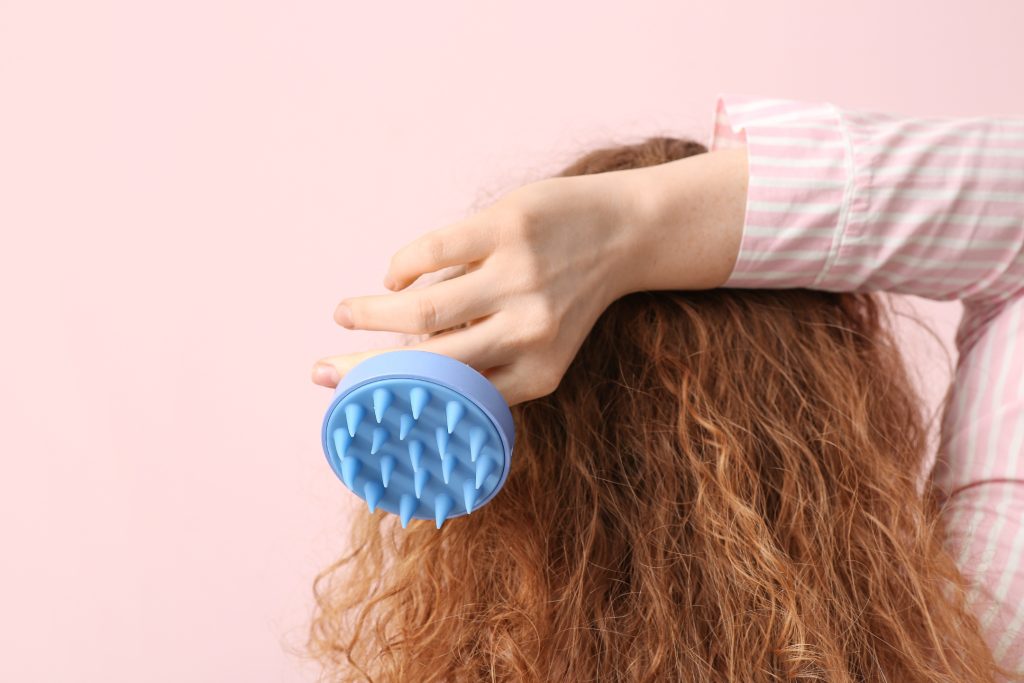
A perfect 5-minute scalp massage
Do this daily, either on dry hair or after applying a topical treatment to your scalp.
Step 1: Position and prep. Use a clean scalp massager: a manual one for more control, or an electric one for extra stimulation. Sit or stand comfortably. Remove any tight hair ties. Take a deep breath to relax.
Step 2: Start at the temples. Place the nodes of the massager against your scalp at your temples. Apply firm, deliberate pressure—enough that you can feel your scalp moving over your skull with each motion. Don’t overdo it! The goal is stimulation, not abrasion.
Step 3: Use deliberate, gliding circles. With that steady pressure, begin making small, slow, circular motions. Gradually glide the massager backward along your hairline, from your temples toward the back of your head. Spend some extra time on areas that feel tight.
Step 4: Work methodically over the crown. Move to the top of your head. Systematically work over your crown and the entire top of your scalp, maintaining that deep, gliding circular motion. Press down firmly, but not excessively so. You should feel no discomfort.
Step 5: Finish the nape and the sides. Finally, work the massager down to the nape of your neck and along the sides behind your ears. These muscles often hold tension.
Aim for full 5 minutes. When done correctly, your scalp should feel slightly warm, but not sore or irritated. This deep, consistent stimulation is a powerful and often overlooked remedy for thick hair.
Patience, consistency, and expectations
If you’re determined to figure out how to get thicker hair naturally, you’ll need all the patience you can find within yourself.
The biggest challenge here might be managing your expectations. With consistent application of natural remedies for thicker hair, you may start to notice reduced shedding in 1–2 months. Visible new growth, however, typically takes a minimum of 4–6 months to appear, and significant changes in overall hair density can take up to a year.
So stay consistent, take pictures to track your progress, and prepare to play a long game. You got this!


-
1.
Integrative and mechanistic approach to the hair growth cycle and hair loss. (2023). https://pmc.ncbi.nlm.nih.gov/articles/PMC9917549/#sec1-jcm-12-00893
-
2.
Does iron deficiency cause hair loss? (2022). https://health.clevelandclinic.org/im-low-in-iron-can-this-cause-me-to-lose-my-hair
-
3.
The therapeutic effect and the changed serum zinc level after zinc supplementation in alopecia areata patients who had a low serum zinc level. (2009). https://pmc.ncbi.nlm.nih.gov/articles/PMC2861201/#sec6
-
4.
Biotin. (2023). https://www.ncbi.nlm.nih.gov/books/NBK554493/#article-18328.s3
-
5.
Nutritional supplements for skin health—a review of what should be chosen and why. (2023). https://pmc.ncbi.nlm.nih.gov/articles/PMC10820017/#sec15-medicina-60-00068
-
6.
Rosemary oil vs minoxidil 2% for the treatment of androgenetic alopecia: a randomized comparative trial. (2015). https://static1.squarespace.com/static/5d4cbfb00e6b2e00019b59b2/t/61f03232e0c0ab15a2b7be6a/1643131442668/rosemaryminoxidil.pdf
-
7.
Peppermint oil promotes hair growth without toxic signs. (2014). https://pmc.ncbi.nlm.nih.gov/articles/PMC4289931/#sec4
-
8.
An overview of commonly used natural alternatives for the treatment of androgenetic alopecia, with special emphasis on rosemary oil. (2024). https://pmc.ncbi.nlm.nih.gov/articles/PMC11549889/#s0009
-
9.
Aloe vera―an extensive review focused on recent studies. (2024). https://www.mdpi.com/2304-8158/13/13/2155