Green Tea for Skin: What Does It Really Do?

Your guides through the skincare chaos
People have been drinking tea for centuries. Some even used it in their beauty rituals. Modern research shows green tea for skin might actually work. But not in the “magic potion” way ads claim.
It’s marketed as a do-it-all ingredient that fights acne, smooths wrinkles, and protects from the sun… Sounds amazing, right? But how much of that is actually backed by science? Let’s dig in before you stock up on another green bottle.
What’s So Special About Green Tea?
Green tea extract comes from the leaves of the Camellia sinensis plant. Unlike black or oolong tea, green tea is barely processed, which helps it keep more of its active compounds.
What’s inside? Catechins (powerful antioxidants), vitamins, and amino acids—compounds that protect the skin from environmental stressors and have antibacterial effects.
And that’s exactly why green tea has become such a popular ingredient in skincare. Plus, it’s a good fit for all skin types.
But what does green tea do in detail? Let’s pour out some facts.
Benefits of Green Tea (Backed by Science)
Before you add another product to your routine, let’s break down what green tea for skin can do, based on current research (not marketing claims).
And a quick question. Do you know if that particular product will work for your skin? That’s where OnSkin comes in. It analyzes a product’s formula and shows you the pros and cons. You’ll know how safe it is and how well it suits your specific skin needs.
Now let’s see the benefits of green tea in action.
1. It can improve skin texture
Smooth, bouncy skin—who doesn’t want that? For years, scientists have been looking for ways to improve our skin’s look and feel, and green tea extract is one of the ingredients they’ve studied.
In one study, 24 volunteers applied a cream with Camellia sinensis leaf extract to their forearms for 30 days. The researchers measured hydration, water loss, elasticity, and skin texture.
The result? The skin was more hydrated, smoother, and more elastic. That’s real proof of green tea benefits for skin!
2. It can protect skin against sun damage

Let’s face it: green tea won’t save your skin from sunburn. But it still has your back!
Green tea extract (whether applied topically or taken as a capsule) can shield the skin from pesky UV exposure. And research backs this up.
In a 7-day study with mice, a cream with 5% green tea extract protected skin cells from the harm caused by UV rays. Plus, this study showed that green tea for skin can be a natural remedy that reduces skin pigmentation caused by sun exposure.
But what about people? Well, science has shown that green tea compounds can also protect human skin cells from ultraviolet damage and help them stay healthy when exposed to sun radiation.
So before your next sunny stroll, sip a cup of green tea for extra backup or apply a serum with green tea extract for targeted skin support. And of course, never skip SPF (this guide can help you choose the right one).
3. It can slow down signs of skin aging

Many of the benefits of green tea for skin overlap with its anti-aging effects. And yes, there’s science behind it.
Green tea compounds help protect skin from oxidative stress, a major cause of premature aging (especially from sun exposure). They also help preserve collagen and elastin by limiting the enzymes that break them down.
In some studies, green tea even reduced wrinkle formation during UV-related aging.
So when it comes to photoaging, green tea may help slow down visible signs of aging over time. But it won’t turn back time overnight.
4. It can soothe inflammation
Inflammation is behind lots of skin troubles: take acne, rosacea, or psoriasis. These conditions can make skin red, swollen, and itchy. And this is where the benefits of green tea really shine through—it’s surprisingly good at soothing inflamed skin.
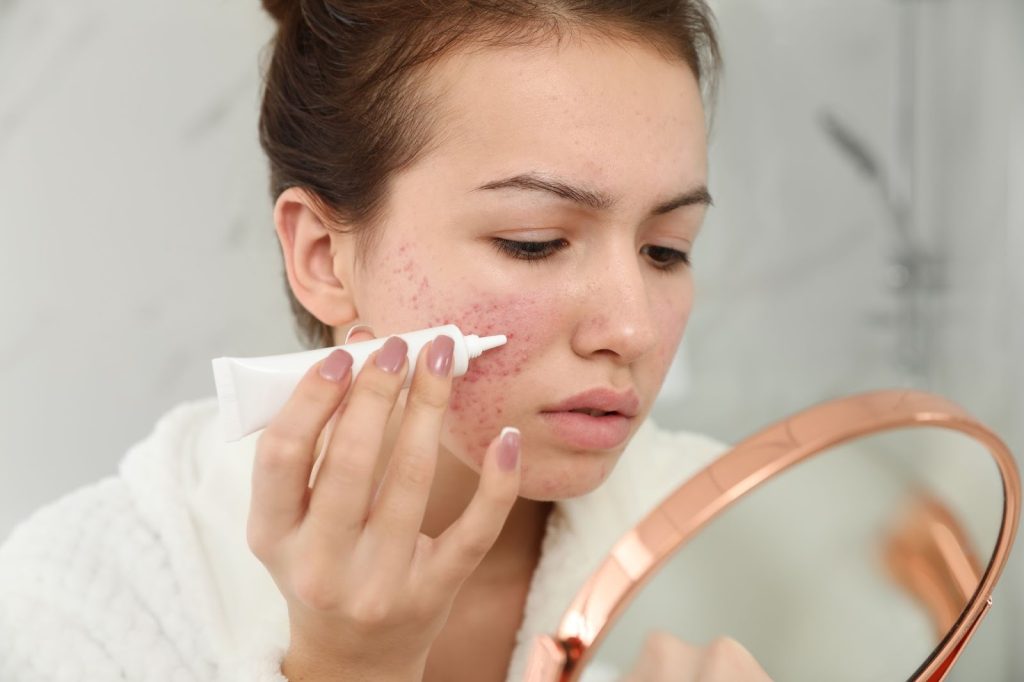
EGCG (epigallocatechin gallate), one of the most active catechins in green tea, is the key player here. It blocks the signals that trigger inflammation. In lab tests with psoriasis-like skin models, researchers packed EGCG into tiny nanoparticles. What did they discover? These nanoparticles reduced redness, scaling, and immune cell activity, while helping healthy skin cells grow.
Plus (as shown in studies with mice and rats), EGCG from green tea can also help wounds heal faster.
Key Takeaways
Green tea may not be a magic potion, but it can still make a real difference for your skin. Here’s what green tea for skin can actually do:
1. Topical green tea extract can make your skin more hydrated, elastic, and smooth.
2. Green tea compounds help protect skin cells from UV damage and may reduce sun-induced pigmentation. But keep in mind: they don’t replace sunscreen.
3. Green tea can be one of your anti-aging shields. It fights oxidative stress, helps preserve collagen and elastin, and may slow down wrinkles from sun exposure.
4. It calms inflammation. How exactly? EGCG, one of the most active catechins in green tea, blocks signals that cause redness, scaling, and immune cell activity.
5. EGCG can also help wounds heal faster, as shown in animal studies.