Everything You Need to Know About Hyaluronic Acid: Benefits And Risks

Your guides through the skincare chaos
Hyaluronic acid has become very trendy in the skincare world, and there’s a reason for that. This natural substance works wonders in keeping your skin hydrated, youthful, and flexible. But what’s the trick? Let’s dive into the benefits of this ingredient, explore how to use it properly, and find out what you should know before adding it to your routine.
What Is Hyaluronic Acid?
According to the Merriam-Webster dictionary, hyaluronic acid (HA) is a viscous glycosaminoglycan chiefly of the matrix of tissues that serves especially as a structural element and lubricant.
Now, let’s put it in simple terms. There are two key things that the dictionary is trying to tell us. First, HA is a substance that our body produces naturally. Second, this substance helps provide structure and keeps our tissues hydrated.
Hyaluronic Acid Benefits
Hyaluronic acid boasts three remarkable benefits: hydration, lubrication, and improved skin flexibility.
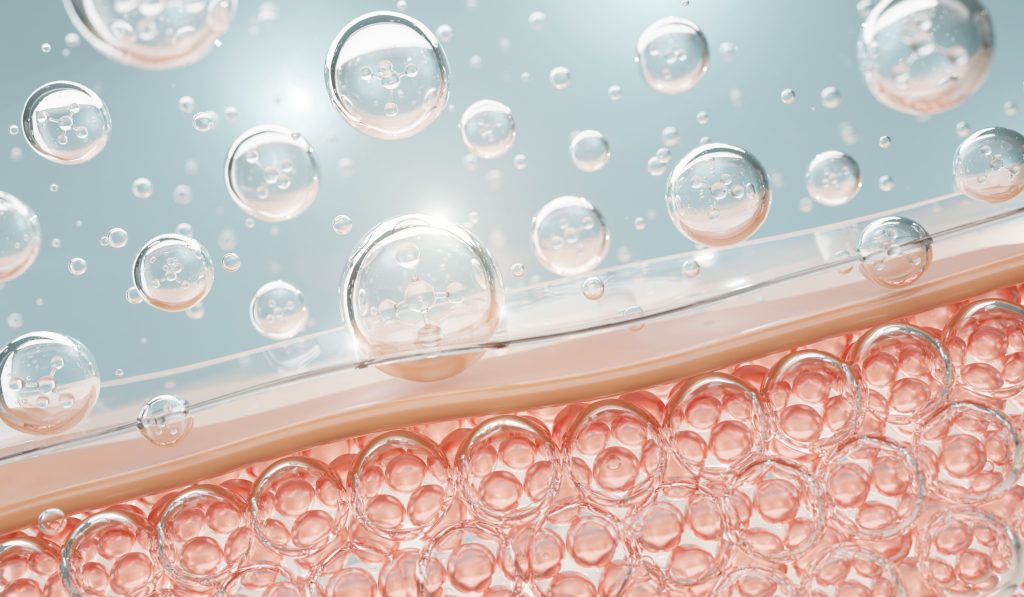
HA is a type of molecule known as a polymer, which is essentially a long, chain-like structure. This structure features multiple attachment points where other substances, such as water, can bind. Due to this sponge-like quality, hyaluronic acid is so effective at holding moisture. To understand its hydrating power, just try to imagine this: one gram of hyaluronic acid can hold up to 6 liters of water. Isn’t it stunning? Hold on a sec. Even more impressive is that it never causes overhydration—HA keeps just the right amount of water, making it an exceptional ingredient in many skincare products.
In addition to that, hyaluronic acid reduces friction between joints, preventing pain and injury that can result from bones rubbing against one another. It also enhances skin elasticity and flexibility and helps skin stretch and recover, smoothing out wrinkles and fine lines.
How Is Hyaluronic Acid Used in Skin Care?
So why do we still need hyaluronic acid in skincare products if it’s produced by our body? The reason is simple, though a bit unfortunate. As we age, our natural level of HA decreases, leaving our skin less hydrated and elastic.
Beyond aging, factors like cold weather, sun exposure, an unbalanced diet, piping hot showers, and other lifestyle habits can contribute to dehydration and dryness, disrupting the skin’s natural functions. This is why replenishing hyaluronic acid becomes essential. And here a good skincare routine steps in.
Nowadays, hyaluronic acid is added practically to any product, like shampoos, gels, creams, serums, patches, and lotions. The reason for it, beyond its moisturizing qualities, is that the ingredient is relatively safe. Though there are some exceptions that we’ll talk about a bit later, hyaluronic acid is suitable for all skin types.
What Are the Exceptions?
Although hyaluronic acid and its derivatives are generally safe, variations in molecular weight and concentration can make a difference in how they affect your skin.
Experts say it’s better to avoid concentrations higher than 2 percent to minimize the risk of irritation or dryness. However, most products don’t mention the exact concentration of their ingredients (since they are not obliged to). The general rule is always the same—the closer the ingredient appears to the beginning of the product’s formula, the higher its concentration. To ensure compatibility with your skin, it’s better to do a patch test beforehand.
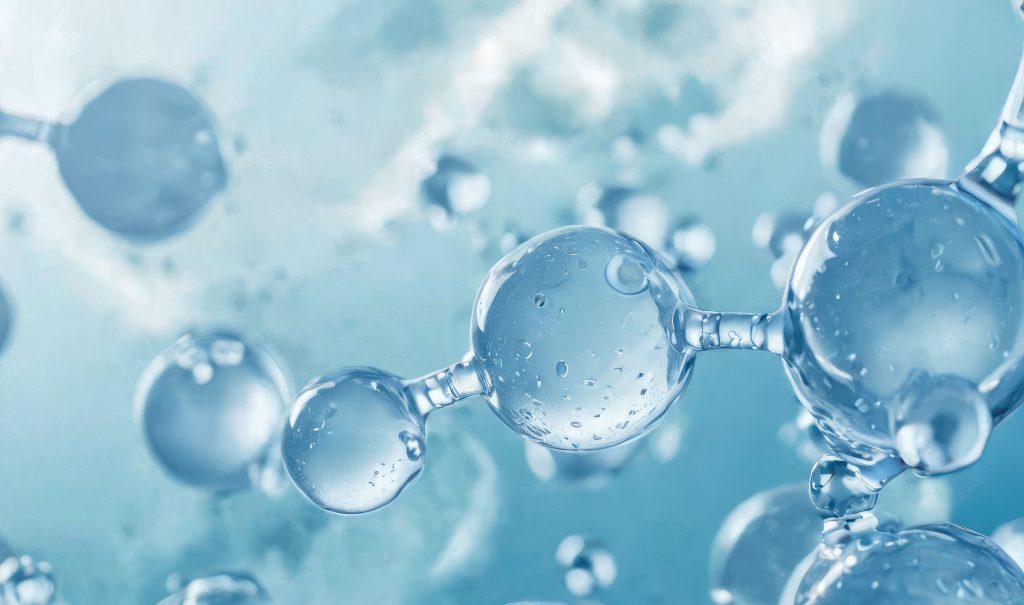
As far as molecular weight is concerned, one study found that low molecular weight hyaluronic acid significantly reduced wrinkle depth. Researchers suggested this might be due to its ability to penetrate the skin more effectively than formulations with higher molecular weights. HA worked best when it had a molecular weight between 50 and 1,000 kDa, with 130 kDa being the sweet spot.
How to Know the HA Weight
Neither the concentration nor the weight are usually mentioned on the product’s packaging. Sometimes, this information might appear in marketing materials. However, there’s a simple trick to get a general idea of what’s in your product, even if the label doesn’t provide exact details.
Hyaluronic acid comes in different forms, and you can find the following ones in a product’s formula:
1. Hyaluronic Acid. This version has a high molecular weight and remains on the surface of the skin, creating a barrier that helps retain moisture.
2. Sodium Hyaluronate. It helps to hydrate and repair the skin by penetrating deeply, reducing damage, and delivering a rejuvenating effect.
3. Sodium Hyaluronate Crosspolymer. It’s a synthetic form of hyaluronic acid with an extremely high weight and exceptional ability to bind water, making it very effective for deep hydration.
4. Sodium Acetylated Hyaluronate. Acetylated sodium hyaluronate possesses notable anti-aging properties, primarily by protecting the dermal matrix (the supportive layer of your skin) from degradation. The acetylation process enhances its ability to penetrate the skin more effectively and increases its lifespan.
Understanding these differences will help you select the most suitable products for your skin’s needs.
There’s another trick you can use. With the OnSkin app, you can simply snap a photo of the product or its barcode, and it will analyze the ingredients, letting you know their effects and whether they’re safe for your skin. So if you don’t feel like checking product formulas all the time, the OnSkin app will have you covered.
How to Apply Products With Hyaluronic Acid
The type of product you’re using determines how you should apply it. These are the two most common forms:
- Moisturizers. Apply a hyaluronic acid-infused moisturizer ideally twice a day—once in the morning and once at night. It’s better to use a moisturizing cream on cleansed skin. If a facial tonic or serum are also a part of your skin care routine, apply the cream afterward.

- Serums. Using a hyaluronic acid serum requires a slightly different approach. After cleansing, while your skin is still damp, gently press a few drops onto your face with your palms. Quickly apply a moisturizer afterward to seal in the moisture.
To Sum It Up
Hyaluronic acid is a powerful hydrator that helps maintain skin’s moisture, elasticity, and smoothness. Though our bodies produce it naturally, levels decline with age, making skincare products that contain this ingredient essential for maintaining hydrated and youthful skin.
Most HA products are safe, but it’s crucial to consider molecular weight and concentration for optimal results. With the right product and application method, hyaluronic acid can be a game-changer in your skincare routine. Tools like the OnSkin app can simplify product selection and ensure compatibility with your skin.


-
1.
Hyaluronic acid, a promising skin rejuvenating biomedicine: a review of recent updates and pre-clinical and clinical investigations on cosmetic and nutricosmetic effects. (2018). https://www.sciencedirect.com/science/article/abs/pii/S014181301833770X?via=ihub
-
2.
Efficacy evaluation of a topical hyaluronic acid serum in facial photoaging. (2021). https://pmc.ncbi.nlm.nih.gov/articles/PMC8322246/
-
3.
Final report of the safety assessment of hyaluronic acid, potassium hyaluronate, and sodium hyaluronate. (2009). https://cir-reports.cir-safety.org/view-attachment/?id=8a154447-8e74-ec11-8943-0022482f06a6
-
4.
Efficacy of cream-based novel formulations of hyaluronic acid of different molecular weights in anti-wrinkle treatment. (2011). https://pubmed.ncbi.nlm.nih.gov/22052267/
-
5.
Designing topical hyaluronic acid technology—Size does matter. (2022). https://pmc.ncbi.nlm.nih.gov/articles/PMC9540682/
-
6.
The anti-wrinkles properties of sodium acetylated hyaluronate. (2021). https://onlinelibrary.wiley.com/doi/10.1111/jocd.14539