
How to Choose the Best Tinted Sunscreen

Your guides through the skincare chaos
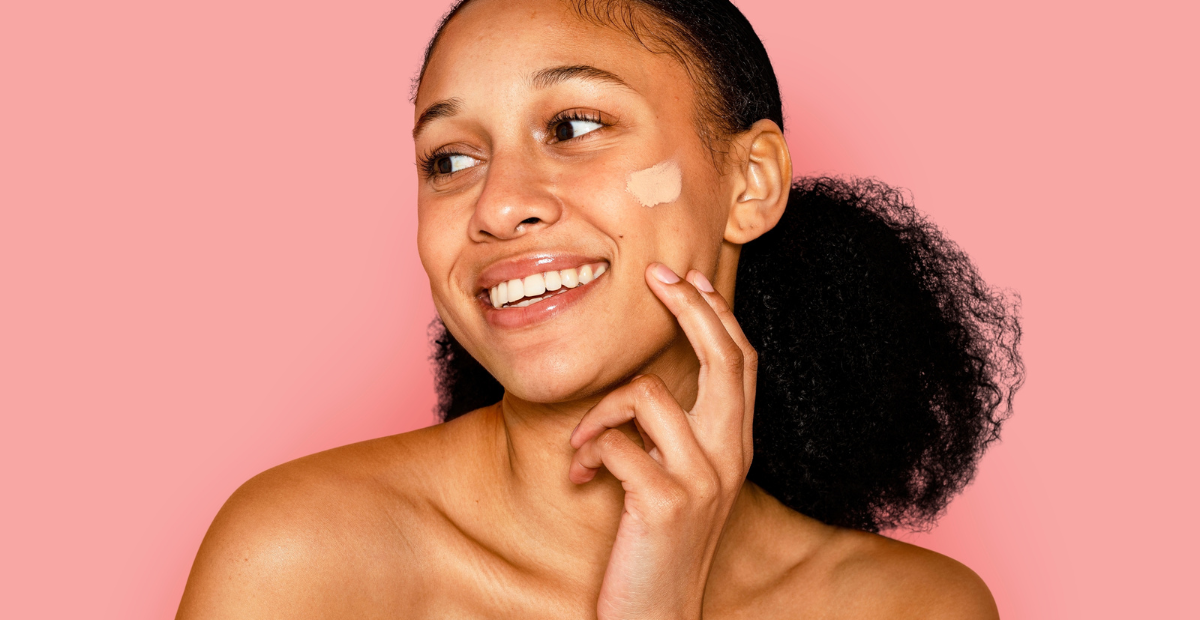
Tinted sunscreen, apart from an attractive glow, has some other impressive benefits for your skin, which not everyone has heard about. Let’s find out why it can become a new skincare friend for you, especially if you’re prone to pigmentation or melasma, and how to choose the best tinted sunscreen.
What Is Tinted Sunscreen?
Tinted sunscreen is a type of sunscreen that contains certain added pigments that give it color. These pigments are usually iron oxides, and we need them not just for the sake of a pretty glow. What’s more important is that they also help protect the skin from visible light by absorbing and scattering it—a trick that goes beyond regular sunscreen’s power, which mainly focuses on fighting UV radiation.
Now, two logical questions arise: what is visible light, and why should we care about it? To answer both, we need to dig into a bit of theory. But don’t worry, it’ll be fun.:)

Why Should We Care About Visible Light?
Visible light, together with UV radiation, is part of the electromagnetic spectrum. Visible light is the portion we can see with our own eyes. UV radiation has shorter wavelengths, which makes it invisible to us. However, both affect our skin, just in different ways.
UV radiation can cause sunburn, DNA damage, and some long-term effects like premature aging and even skin cancer. Regular sunscreens, as long as they have sufficient SPF and are applied properly, can protect against UV rays (UVA and UVB), though no sunscreen can offer 100% protection.
But what they can’t do at all is fight the negative effects of visible light, and those effects are real.
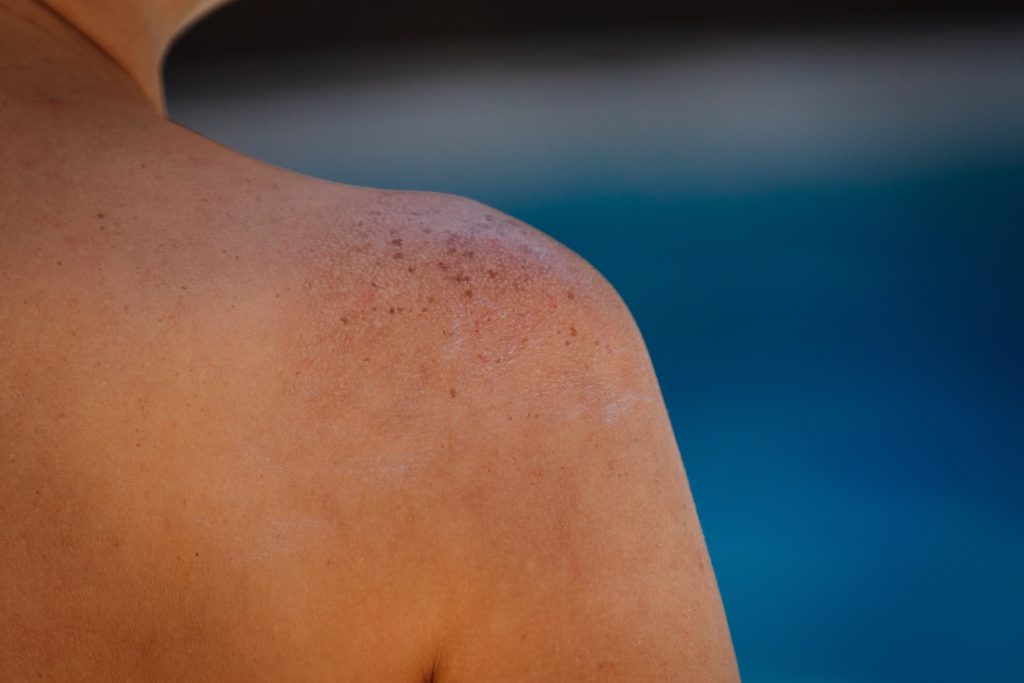
It can cause hyperpigmentation in people with darker skin types.
In one study, researchers exposed the lower backs of 20 volunteers to UVA1 (a type of UVA with longer wavelengths than UVA2) and visible light to check how each contributed to skin darkening. As a result, both caused hyperpigmentation, but visible light made it darker and longer-lasting in patients with darker skin types (IV-VI). At the same time, people with lighter skin (type II) didn’t show any changes.
It can cause erythema in people with light skin.
In another study, 10 adults with light skin (types I–III) had their lower backs exposed to a combination of visible light and UVA1. Scientists found that the skin turned red immediately after exposure, even though this type of redness had been mostly linked to UVB and short-wave UVA.
Who Should Consider Using Tinted Sunscreen?
Tinted sunscreens are available practically in any shop and can be used by anyone, but they’re especially beneficial for people prone to:
- Melasma.
In one study, researchers compared two types of sunscreens: one that protected only against UVA and UVB, and another that was tinted and contained iron oxides. Forty patients with melasma applied one of the two sunscreens every day. After six months, those who used non-tinted sunscreen experienced more relapses. In contrast, the group that applied the tinted sunscreen had significantly fewer flare-ups.
- Hyperpigmentation.
In another study, 40 adults with hyperpigmentation used sunscreens that protected against both UV and visible light. The results showed that formulas combining UV filters with protective pigments helped reduce melanin levels (high levels of which can cause hyperpigmentation), lighten dark areas, and decrease the size of hyperpigmented patches.
How to Choose the Best Tinted Sunscreen
Look for sunscreens with iron oxides in the formula. As we already know, these pigments help protect the skin from visible light.
Opt for products with mineral filters. As many tinted sunscreens go with such mineral filters as zinc oxide and titanium dioxide, there’s a common misconception that they are all mineral-based. However, they aren’t. Tinted sunscreens can also contain chemical filters, and some of them are associated with possible risks for your health. That’s why it’s always best to check the ingredients list before you use or buy a product, especially if you have sensitive skin.
If you don’t want to plunge into ingredient lists every time, searching for mineral filters or iron oxides, you can use the OnSkin app. The app analyzes a product’s formula and shows you all the pros and cons in terms of safety and how well it matches your skin issues. You can also use the Skincare Finder Tool to find the right product. Simply select the filters “Sunscreen” and “Physical (mineral) filters” to get a list of suitable options.
Choose one with at least SPF 30, recommends the American Academy of Dermatology. Just like with regular sunscreens, the sun protection factor matters: the higher the SPF, the better the protection.
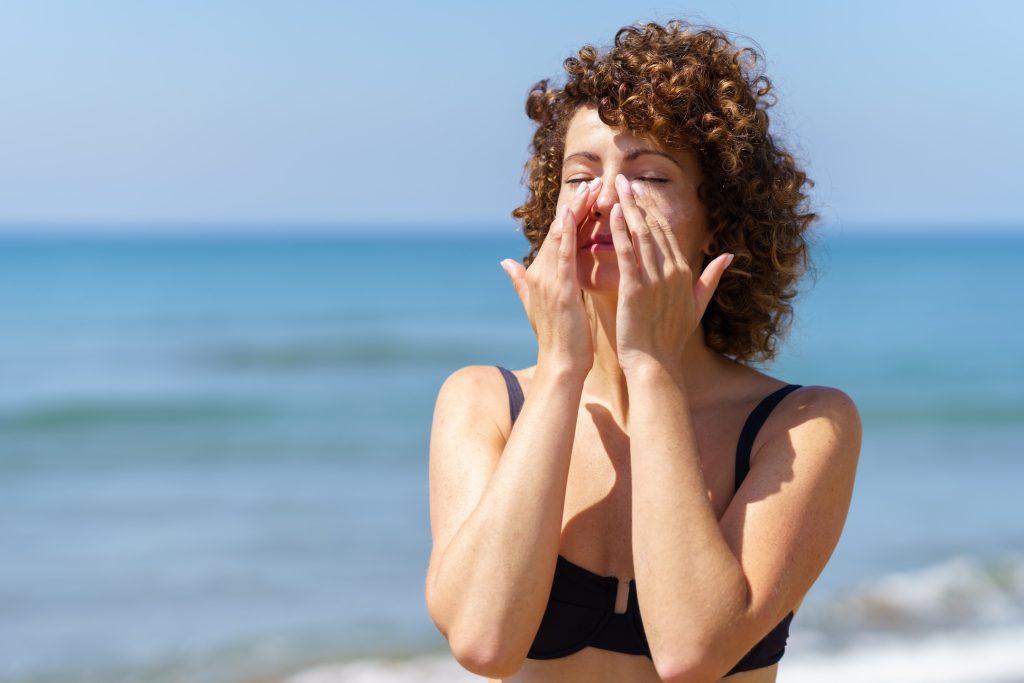
More scientific research is needed to say for sure, but early studies suggest that sunscreens with antioxidants, together with UV protection, may also help reduce redness in lighter skin and pigmentation in darker skin caused by visible light and UVA1.
Also, choose a shade that matches your undertone (warm, cool, or neutral). Test it on your jawline rather than your hand, as the colors often differ. If you’re between two shades, the slightly darker one usually blends more naturally into the skin.
Key Takeaways
Tinted sunscreen isn’t just regular sunscreen with a bit of color. Thanks to pigments like iron oxides, it can also offer something more than regular sunscreen can. In particular, it helps protect the skin from visible light.
Visible light may not burn the skin the way UV rays do, but it can still affect it. In people with darker skin tones, it may trigger longer-lasting hyperpigmentation. In lighter skin tones, it can contribute to redness. To cut it short, the protection beyond SPF alone that tinted sunscreen offers can also matter, especially if you’re prone to melasma or dark spots.
The best tinted sunscreen should contain iron oxides, mineral filters, and antioxidants, be at least SPF 30, and, for sure, match the shade of your skin.


-
1.
The impact of ultraviolet radiation on skin photoaging—review of in vitro studies. (2021) https://pmc.ncbi.nlm.nih.gov/articles/PMC8597149/
-
2.
Impact of long-wavelength UVA and visible light on melanocompetent skin. (2010) https://pubmed.ncbi.nlm.nih.gov/20410914/
-
3.
Impact of long-wavelength ultraviolet A1 and visible light on light-skinned individuals. (2019) https://pubmed.ncbi.nlm.nih.gov/31344760/
-
4.
Prevention of melasma relapses with sunscreen combining protection against UV and short wavelengths of visible light: a prospective randomized comparative trial. (2014) https://www.jaad.org/article/S0190-9622(14)01870-2/pdf
-
5.
Influence of visible light on cutaneous hyperchromias: Clinical efficacy of broad-spectrum sunscreens. (2018) https://pubmed.ncbi.nlm.nih.gov/29381828/
-
6.
How to select a sunscreen. https://www.aad.org/public/everyday-care/sun-protection/shade-clothing-sunscreen/how-to-select-sunscreen
-
7.
Impact of visible light on skin health: The role of antioxidants and free radical quenchers in skin protection. (2021) https://pubmed.ncbi.nlm.nih.gov/34942294/