Yellow Skin Without Jaundice

Your guides through the skincare chaos
Jaundice often gets the blame for yellow skin. The truth is, yellow skin can also result from carotenemia, hypothyroidism, vitamin B12 deficiency, or certain medications. One easy clue: if the whites of your eyes are, well, white, jaundice probably isn’t the culprit. In this article, we’ll cover what causes yellow skin, the symptoms to watch for, and when to see a doctor.
What Is Jaundice?
What is jaundice, exactly? When it comes to true jaundice, the yellowing is more than a tint—it’s a signal. The whites of your eyes usually turn yellow first, followed by your skin, which can range from pale to deep yellow, and sometimes even greenish if bilirubin builds up for a long enough time. Other clues often come with it: dark urine, pale stools, fatigue, and itching.
If your eyes and skin are both yellow or you notice these additional symptoms, it’s important to quickly see a doctor. Jaundice can point to liver or blood issues that need attention—unlike harmless yellowing from carrots or a vitamin boost.
When Your Diet Causes Yellow Skin
If you’ve been eating a lot of carrots, pumpkin, papaya, mangoes, or sweet potatoes and suddenly notice yellow skin, your diet may be the reason.
The so-called carotenemia happens when carotenoids (which are natural pigments found in fruits and vegetables) build up in the outer layer of your skin. The color usually shows up on the palms, soles of the feet, tip of the nose, and around the mouth. Even though it can look dramatic, in most cases, it isn’t actually dangerous.

One important difference: the whites of your eyes stay completely clear. That’s one of the key ways doctors know that the yellow tint isn’t from your liver. Research published in Clinics in Dermatology explains that eating a lot of carotene-rich foods or taking high-dose beta-carotene supplements for months can give your skin a yellow-orange tint, since the extra carotene isn’t fully converted to vitamin A.
The promising part? Once you ease up on carotene-rich foods, your skin usually goes back to its normal tone within a few weeks. You don’t need extreme diet changes—just balance.
However, if you’re still wondering, “Why is my skin yellow?”, and your yellow skin tone is spreading or affecting the whites of your eyes, it’s best to speak with a healthcare professional to rule out other causes.
Hypothyroidism and Yellow Skin
If your skin looks a little dull and dry, and you notice a yellowish-orange color on your palms and the soles of your feet, your thyroid may be playing a role. When the thyroid is underactive, the body’s ability to convert beta-carotene into vitamin A slows down.
That extra carotene can build up in your skin, giving it a yellow tint. It may come in combination with other signs—including feeling colder than everyone else, unexplained weight gain, fatigue, and constipation.
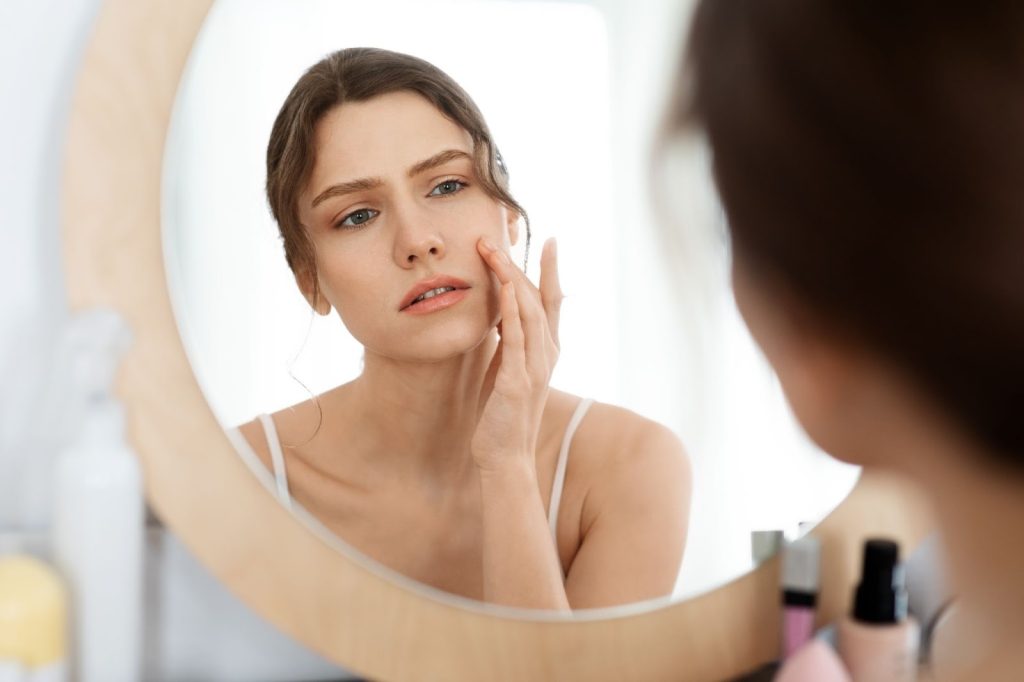
Hypothyroidism can also affect your hair and nails. You might notice thinning eyebrows, brittle or slow-growing hair, and nails that become dry, ridged, or break easily. Skin changes can include dryness, scaling, and swelling of the face or eyelids. These are some of the most common skin and hair symptoms of thyroid problems, according to the American Academy of Dermatology.
Early detection is important. Your dermatologist or primary care doctor may spot these subtle changes before other symptoms appear. So if you notice several of these signs, including yellowing of skin, it’s a good idea to visit your doctor. Treating hypothyroidism early can help restore energy, skin condition, and overall well-being.
How B12 Deficiency Shows Up on Your Skin
Different vitamin and mineral deficiencies can also affect your skin color. For example, a vitamin B12 deficiency can subtly change your skin, sometimes giving it a yellowish tint. Other clues are tiredness that sticks with you, tingling in your hands or feet, and even hair loss.

You might ask, “Why does my skin look yellow with a B12 deficiency?” This vitamin is essential for producing healthy red blood cells. Without enough, your body can’t make enough RBCs, leading to megaloblastic anemia. When red blood cells break down, the liver releases bilirubin, which can make yellow skin occur—a condition that could be mistaken for jaundice.
To avoid all these, get B12 from meat, poultry, and eggs, or discuss taking supplements with your doctor. See your doctor anytime you notice pale or yellowish skin along with fatigue or unusual symptoms, so they can check your B12 levels.
Medications That Can Cause Yellow Skin
Sometimes, yellow skin isn’t about your diet or vitamins—it can be your medicine. Certain drugs, like nonsteroidal anti-inflammatories, cytotoxic drugs, and tetracyclines, can temporarily change your skin tone.

These changes, called drug-induced pigmentation, happen in about 10-20% of people who notice skin color changes. Different medications do this in different ways: some increase melanin, while others react to sun exposure, and some may even leave tiny deposits in the skin.
In most cases, the tint slowly fades once the drug is paused or sun exposure is limited. For stubborn cases, a dermatologist might suggest laser treatment, though some pigmentation can linger. If you notice yellowing of skin after starting a new medicine, it’s wise to talk to your doctor.
When to See a Doctor for Yellow Skin
Here’s the takeaway: yellow skin doesn’t always scream “emergency.” It could be carotenemia from your latest smoothie binge. Sometimes, it signals a B12 deficiency or a subtle thyroid issue. Medications can also tint your skin.
Still, don’t ignore it. If you’re still asking yourself, “Why is my skin yellow?”, watch for changes in your eyes, energy level, and any new symptoms. When in doubt, a quick chat with your doctor and a simple blood test can put your mind at ease. At the end of the day, understanding what causes yellow skin can help you tell harmless tints from signs of a condition you shouldn’t ignore, like jaundice.


-
1.
Vitamin deficiencies/hypervitaminosis and the skin. (2021.)) https://www.sciencedirect.com/science/article/abs/pii/S0738081X21000742
-
2.
Thyroid disease: A checklist of skin, hair, and nail changes https://www.aad.org/public/diseases/a-z/thyroid-disease-skin-changes
-
3.
What are the symptoms of vitamin B12 deficiency? https://www.medicalnewstoday.com/articles/324265#pale-skin
-
4.
Drug-induced skin pigmentation. Epidemiology, diagnosis and treatment. (2001.) https://pubmed.ncbi.nlm.nih.gov/11705252/
-
5.
Jaundice. (2023.) https://www.ncbi.nlm.nih.gov/books/NBK544252/