Is Vaseline Good for Your Lips? Let’s Investigate

Your guides through the skincare chaos
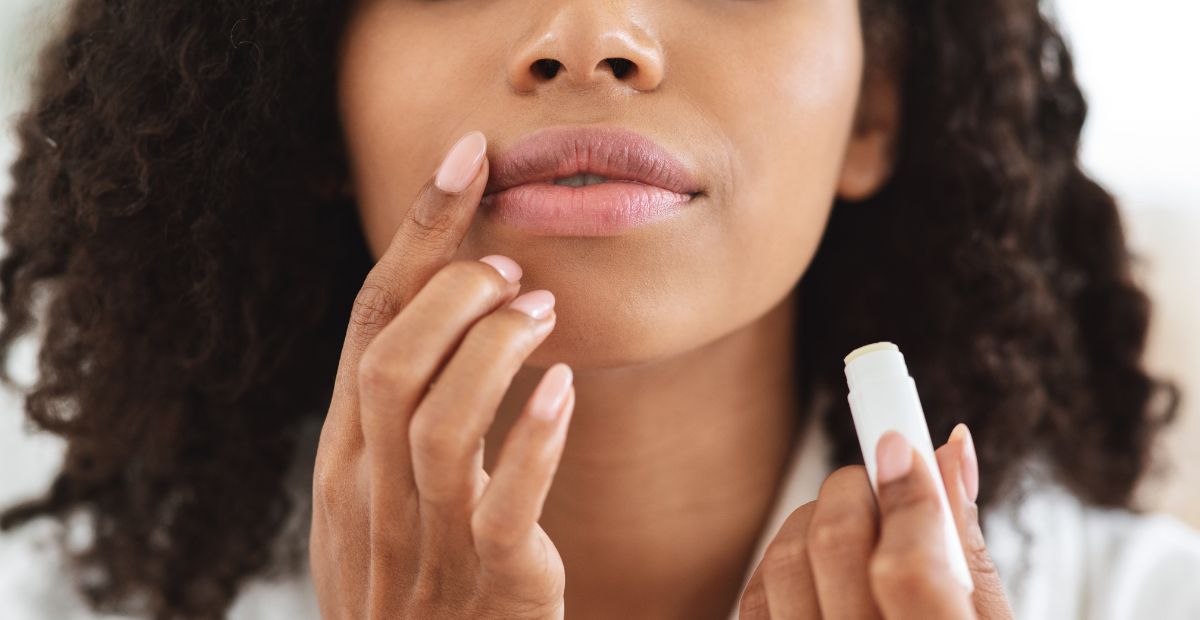
If you find yourself looking up “Is Vaseline good for your lips?”, you’ve either gone through a plethora of high-end products that didn’t work for you, or you’ve heard some valid (and not so valid) claims made about petroleum jelly, and want to be sure it’s safe to use.
Chapped lips are a common issue. Think about it, how many lip balms do you have stashed all around your house? What about your bag? Maybe even your pockets? Here’s some not-so-great news: some of those balms might be the reason your lips get dry so fast.
Would Vaseline work any better? It’s a household staple, but can you put petroleum jelly on your lips? Well, sure you can, but should you?
Let’s talk about it.
How does Vaseline work?
First things first, you need to understand what you’re dealing with. The key ingredient in Vaseline is petroleum jelly, which is a byproduct of the oil refining process.

Now, before that tidbit of information scares you off, know that it’s highly purified and refined to be completely safe for topical use on the skin and ingestion.
Please note that we do not recommend eating Vaseline or other petroleum jelly products! They might not be toxic, but their texture can cause issues when swallowing.
What does Vaseline do to your lips?
Contrary to popular belief, petroleum jelly’s superpower isn’t adding moisture, but rather creating a barrier that seals in moisture. Think of it as a protective shield. When you apply it, it sits on top of your skin and locks in whatever moisture is already there. This prevents said moisture from escaping into the dry air around you.
So, does Vaseline moisturize lips at all? The answer is a bit nuanced. It doesn’t work like a humectant would (think hyaluronic acid), but it is a huge help in the battle against chapped lips. Understanding how Vaseline seals in any other skincare products you might use can help you decide whether it’s a good match for your routine.
Can you put Vaseline on your lips?
If you have dry, chapped lips that constantly cause you discomfort, the short answer is yes, you absolutely can. Petroleum jelly is chemically similar to proteins in our skin, so it’s actually one of the best things you can put on the dry areas of your body!
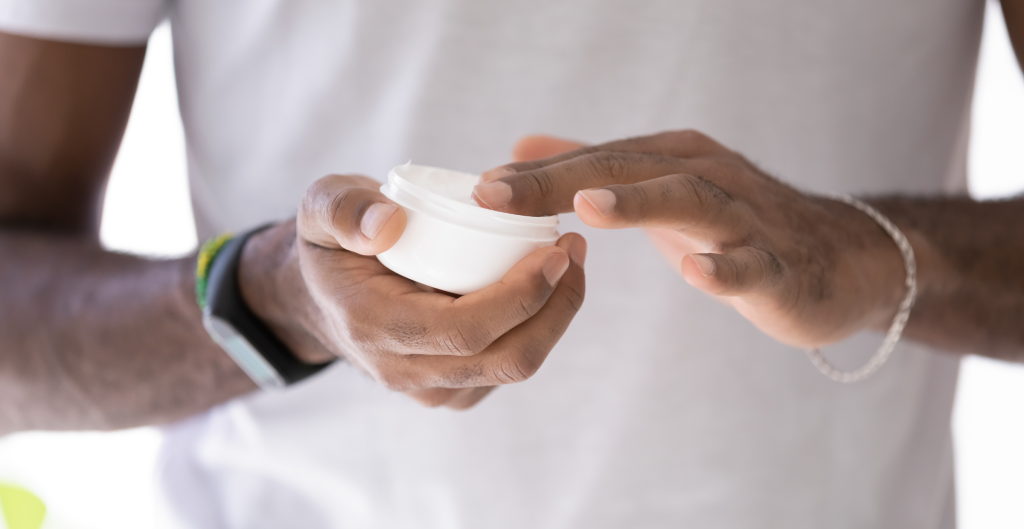
But does Vaseline help chapped lips better than your regular lip balm?
Let’s see.
Healing and hydration
By creating that seal, Vaseline gives your lips a chance to heal themselves in a protected, hydrated environment. So, whatever you have going on with your lips on this particular day has a chance of healing quicker than if you just applied your regular lip balm.
Adverse reactions
Some of the lip products can cause issues rather than solve them. That would depend on several factors, including the formulation and any allergies you may have to the ingredients (always remember to check those!)
So, is Vaseline good for your lips? So far, it makes sense to answer yes to that question. After all, petroleum jelly is a classic remedy for a reason!
Two truths and a lie: Vaseline edition
Or, more accurately, two lies and a truth about petroleum jelly that would help you decide whether this product is for you. There are many (way too many) concerning claims on the Internet, which is not surprising. You and many others really want to know: Is Vaseline good for your lips or not?
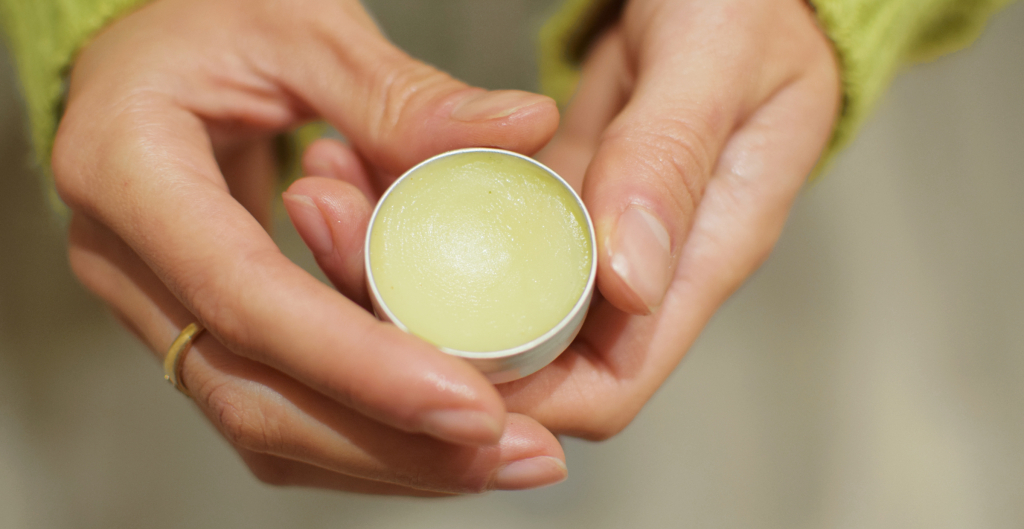
Let’s break down those claims one by one.
Myth 1: Vaseline is toxic and carcinogenic
Some folks think that because Vaseline is petroleum jelly, it must be full of harmful chemicals. The truth is, the purification process for cosmetic-grade petroleum jelly is highly regulated, and highly refined petroleum jelly is not considered a carcinogen. It’s safe to use in cosmetics, topical ointments, and even foods.
Myth 2: It dries out your lips over time
Does Vaseline dry out lips over time? The theory is that by creating a barrier, your lips can somehow become “lazy” and stop producing their own moisture, making you dependent on the product. This is a popular myth, but there’s no scientific evidence to support it.
Petroleum jelly doesn’t affect your skin’s natural physiological processes or oil production; it just protects what’s already there.
The one valid concern: Incorrect use
Sometimes Vaseline doesn’t feel like enough. If your lips are severely dehydrated to begin with, slathering on a pure occlusive is like putting a lid on an empty jar—there’s no moisture inside to lock in. This is why some people report a lack of results or even a slight worsening—they’re not addressing the underlying dryness first.
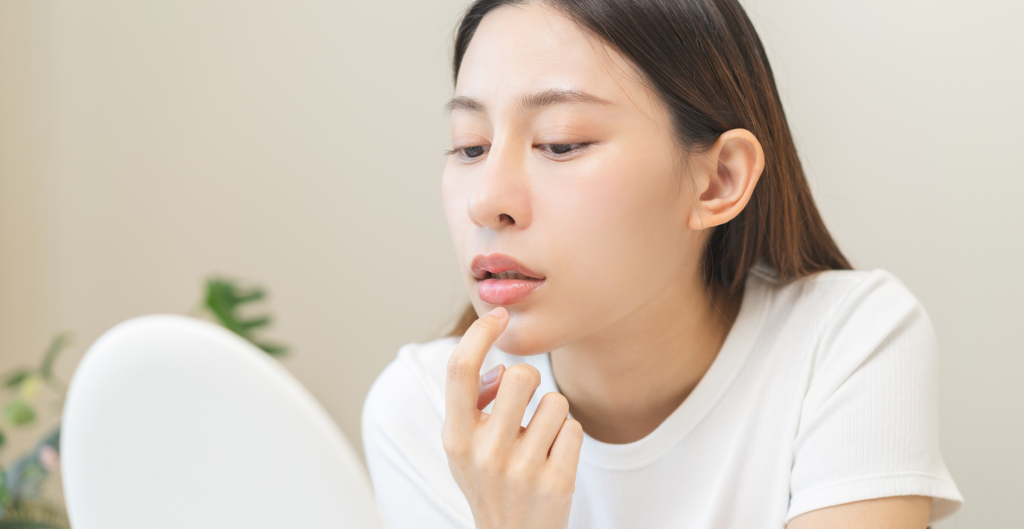
The product itself isn’t drying them out; it’s just not adding the hydration their skin desperately needs.
But wait! There’s more.
Vaseline’s occlusive properties make it suitable for more than just the skin of your lips. Before we wrap up, let’s take a look at some of the alternative uses for that family-size blue jar.
Use it as a highlighter.
This beauty hack might not be for everyone, but some makeup artists and beauty enthusiasts swear by it! To achieve a dewy, glass-skin glow, dab a tiny amount of petroleum jelly on the high points of your cheekbones, the brow bone, and the cupid’s bow. The jelly catches the light beautifully, giving a more subtle look than your usual powder highlighters.
A warning for any acne-prone folks! Be cautious about applying Vaseline to areas where you commonly break out—you’re risking potentially trapping oil and bacteria underneath.
Use it for skin protection.
Another classic use is for protecting the skin in extreme conditions. Runners and athletes often swipe a bit of Vaseline on their nose, cheeks, and other exposed areas before a long, cold winter run to create a barrier against windburn and frostbite.
It’s also famously used to prevent chafing in areas where skin rubs against skin or clothing. It reduces friction, which can be a lifesaver on long hikes or runs.

Use it as a perfume enhancer.
You might’ve heard of this one before! Using Vaseline as a perfume enhancer went viral on social media last year, and the trend is continuing in 2025.
The theory is that applying a small dab of Vaseline on your wrists and neck beforehand helps your favorite perfume last longer. It makes sense if you think about it! Petroleum jelly provides a slightly oily surface for the perfume molecules to cling to. While you shouldn’t expect miracles, this might help your favorite (sometimes pricey) scents stick around for a few more hours.
Wrapping up
Let’s circle back to our original question one last time: Is Vaseline good for your lips? The consensus, backed by science and decades of practical use, is a confident yes.
The real secret to making it work isn’t in the formula, but in how you use it. Remember: hydrate first, then seal. Be aware of your skin’s needs, and if you ever experience any unusual irritation, it’s always a good idea to pause and see a dermatologist.


-
1.
Petroleum jelly: a brief review of its history, uses and safety. (2024). https://impactfactor.org/PDF/IJPCR/16/IJPCR,Vol16,Issue10,Article150.pdf
-
2.
Mayo Clinic Minute: The many benefits of petroleum jelly. (2023). https://www.mayoclinic.org/healthy-lifestyle/adult-health/multimedia/mayo-clinic-minute-petroleum-jelly/vid-20469256
-
3.
Trending – petroleum jelly. (2023). https://cris.msu.edu/news/trending/trending-petroleum-jelly/

You May Be Interested In
View All