Bakuchiol: The Retinol Alternative Your Skin Will Love

Your guides through the skincare chaos
With the growing retinol fever during the fall and winter seasons, it’s hard not to hear someone doling out compliments on its magical (and very real) properties. The problem is that retinol isn’t suitable for everyone: it can cause dryness, irritation, and other skin issues. And that’s where bakuchiol steps in—the gentle alternative your skin might just fall in love with. Let’s plunge into the world of this skincare ingredient to understand whether this love can be mutual.
What’s the Problem With Retinol?
First, let’s start with what retinol actually is. It’s a form of vitamin A that boasts powerful rejuvenating and brightening effects, reduces pigment spots, and helps to fight acne and post-acne. However, retinol can also bring unwanted side effects, such as dryness, exfoliation, skin irritation, and, in some cases, retinoid dermatitis.
It’s also a well-known fact that retinol and over-the-counter retinoids aren’t recommended during pregnancy and lactation. Moreover, retinol isn’t always a good friend to those with sensitive skin, because in this case, the chance of side effects increases. You can read our comprehensive guide about pros and cons of retinol right here.
But don’t worry, there’s a way out. A gentler, yet effective, rejuvenating ingredient called bakuchiol is often referred to as a natural, safe substitute for retinol.
What Is Bakuchiol?
Bakuchiol is a type of meroterpene phenol that is present in the seeds and leaves of the Psoralea corylifolia plant. It might sound a little complicated, but let’s break it down. Bakuchiol is a chemical derived from terpenes (organic molecules commonly found in plants) and contains a phenolic group (a specific chemical structure). The plant, widely found in Southeast Asia, has long been used in traditional medicine, especially in China and India.
For the first time it was isolated from Psoralea corylifolia seeds by Indian researcher and scientist Goverdhan Mehta and his colleagues in 1966. They named it bakuchiol, inspired by the plant’s Sanskrit name, Bakuchi.
Bakuchiol Benefits
Both bakuchiol and retinol are active ingredients that improve the condition of skin, but they work in different ways.
Bakuchiol is a good antioxidant.
First, bakuchiol shows a high antioxidant capacity compared to retinol. While both ingredients reduce levels of inflammatory natural chemicals (PGE2 and MIF), bakuchiol additionally stimulates FGF7 protein, which supports the skin’s natural renewal process.
Both ingredients boost the production of key skin proteins (COL1A1, COL7A1, FN), which can improve and strengthen the skin’s structure.
It promotes healing.
Secondly, it heals wounds. Skin wounds treated with bakuchiol regenerate the epidermis (the outermost skin layer) faster compared to those treated with retinol. Areas treated with the ingredient demonstrate significant improvements, such as increased levels of FN protein, within just four weeks.
Bakuchiol works fine in summer.
Third, you can use bakuchiol even in summer because it doesn’t cause photosensitivity. The thing is that photosensitizing ingredients can make the skin more reactive to sunlight, leading to heightened sensitivity or irritation when exposed to UV rays. That’s why you can also apply bakuchiol during any part of the day.

It produces collagen.
Fourth, scientists have found that bakuchiol helps the skin produce essential collagen types (I, III, and IV), which are in charge of elasticity, smoothness, and regeneration of skin. In laboratory tests, participants who applied creams with bakuchiol for 12 weeks experienced improved skin resilience, fewer wrinkles and fine lines, reduced pigmentation, and healing of damage typically associated with retinol—all without the usual side effects of retinol.
Bakuchiol effectively combats wrinkles.
Fifth, research has revealed that both bakuchiol and retinol were equally effective in significantly reducing wrinkle surface area and hyperpigmentation. However, retinol users reported more side effects, such as skin flaking and burning. The most noticeable results appeared after 12 weeks, with a 20% reduction in wrinkle severity.
Bakuchiol vs Retinol
Bakuchiol doesn’t look chemically similar to retinol but acts in a very similar way. Scientists have found out that both ingredients have nearly identical effects on how genes behave in skin cells. Both substances increase the production of collagen types I, III, and IV, essential for preserving firm and youthful skin. These findings were confirmed through experiments that measured changes in gene activity, protein levels, and tissue structure.
Bakuchiol was also tested in a skincare product used twice a day for 12 weeks. The results showed noticeable improvements in wrinkles, fine lines, pigmentation, skin elasticity, and firmness, along with a reduction in sun damage. In contrast to retinol, bakuchiol didn’t lead to the typical side effects such as redness, irritation, or peeling.
Anyway, the fact that the product contains bakuchiol doesn’t mean it’ll 100% be a match for you. Other ingredients may not be suitable for your skin type and can trigger skin issues. That’s where the OnSkin app comes in handy. It takes into account any existing skin concerns, like sensitivity, acne, or dryness, to give you personalized recommendations. With such insights, you can confidently choose a bakuchiol product that works best for your skin, ensuring you enjoy its benefits without any unwanted side effects.
How to Apply Bakuchiol and Where to Find It
Now, when you’re familiar with its benefits, the next step is to choose a skincare product with bakuchiol in its formula. It’s commonly found in eyelid and face creams, and there’s a good reason for this—these products stay on the skin longer than cleansers, making their effects stronger.
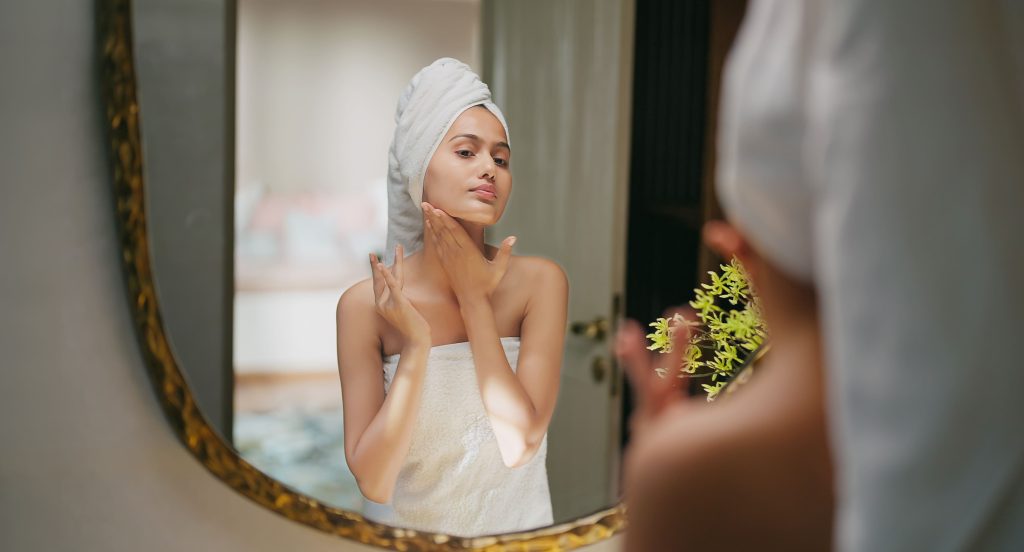
Bakuchiol is a completely safe ingredient, making it a great choice for anyone considering a rejuvenating cream. Another advantage is its versatility: you can use it both in the morning and at night because the ingredient doesn’t increase your skin’s sensitivity to UV rays. Unlike retinol or acids, there’s no risk of pigmentation. That said, sunscreen remains a non-negotiable part of your skincare routine—it’s essential for overall skin health and protection.
When selecting a bakuchiol cream, keep your skin type in mind. The right product should hydrate without drying out your skin or causing blackheads and pimples. If you’re not sure whether a product is a match for your skin type, you can use the Onskin app. It’ll delve into all the ingredients in the product’s formula and tell you whether they can help you with the skin issues you have at the moment.


-
1.
Epidermal hyperplasia and elevated HB-EGF are more prominent in retinoid dermatitis compared with irritant contact dermatitis induced by benzalkonium chloride. (2010). https://pmc.ncbi.nlm.nih.gov/articles/PMC2917682/
-
2.
Bakuchiol: a retinol-like functional compound revealed by gene expression profiling and clinically proven to have anti-aging effects. (2014). https://pubmed.ncbi.nlm.nih.gov/24471735/
-
3.
Bakuchiol, a novel monoterpenoid. (1966). https://www.sciencedirect.com/science/article/abs/pii/S0040403900700785?via%3Dihub
-
4.
Multidirectional activity of bakuchiol against cellular mechanisms of facial ageing ‐ experimental evidence for a holistic treatment approach. (2022). https://pmc.ncbi.nlm.nih.gov/articles/PMC9328396/
-
5.
Development of a new chromatographic method for the determination of bakuchiol in cosmetic products. (2023). https://www.nature.com/articles/s41598-023-41076-7
-
6.
Assessment of topical bakuchiol and retinol for facial photoageing. (2019). https://academic.oup.com/bjd/article-abstract/180/2/e45/6601602