Everything You Need to Know About Permanent Hair Straightening

Your guides through the skincare chaos
Ever stared in the mirror, wishing your hair would just behave? Permanent hair straightening promises to give you exactly that—transforming curls, waves, or frizz into smooth, sleek strands that last for months. It’s not a miracle, but it can feel that way. Hair straightening treatments alter your hair to stay straight until new growth appears, so you won’t need to wrestle with a flat iron every morning.
Let’s take a closer look at how different types of treatments work their magic. Do they come with any surprises for our hair?
What Is Permanent Hair Straightening?
To be clear, permanent hair straightening is a chemical process that reshapes the natural structure of your hair, whether it’s curly, wavy, or frizzy.
Unlike temporary styling tools, which only change the appearance of your hair for a day, permanent hair straightening treatments work at a totally different level. They break and reset the protein bonds that give your hair its natural texture, leaving it straight until new growth emerges.
The process usually involves applying a chemical solution that softens and restructures the hair, followed by a neutralizer that locks in the new shape. That’s why you might hear phrases like “chemically straighten hair” or “chemical hair straightening.” Depending on the method, hair professionals may also apply heat to seal the style.
To sum it up, the goal of any hair straightening method is frizz-free hair that lasts for months. And you can forget all about daily styling!
4 Types of Permanent Hair Straightening
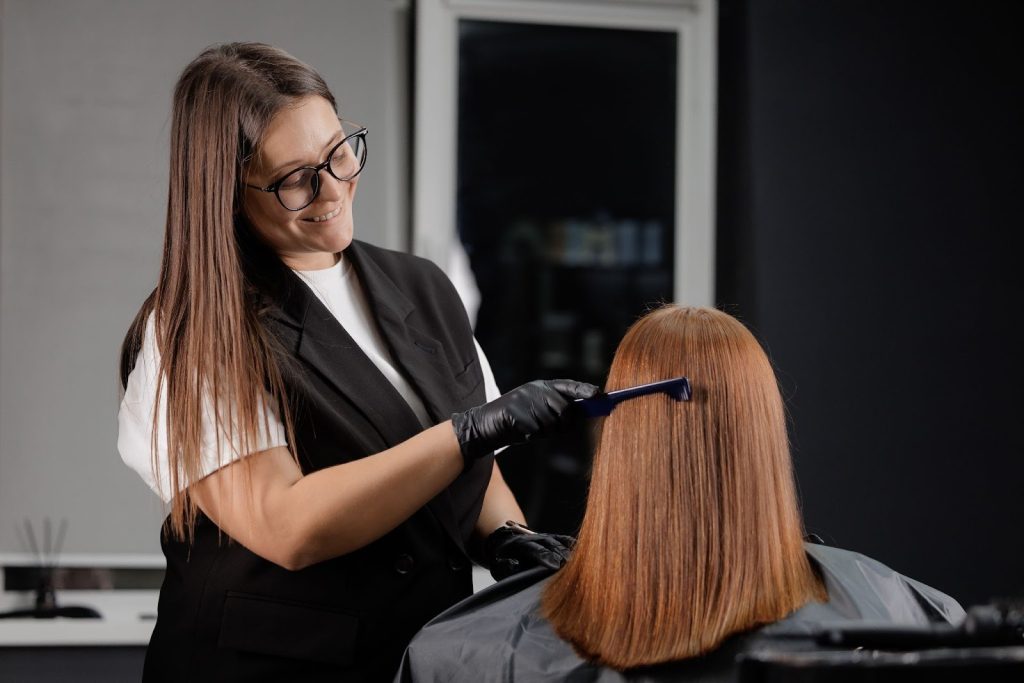
There isn’t a one-size-fits-all approach. Let’s break down the most popular straightening hair treatments and what makes each one special.
1. Keratin Treatment
How it works: Instead of harsh chemicals, it coats your strands with keratin. Keratin is a natural protein found in hair and nails. As your hair loses keratin over time, it can become dry, damaged, and frizzy. A keratin hair straightening treatment helps replenish this protein for a smoother, healthier look.
Best for: People who want smooth, shiny hair without resorting to harsher chemical methods.
How long it lasts: It’s semi-permanent. With time, your hair gradually returns to its natural state, especially at the roots.
Things to know: This method is also known as Brazilian hair straightening.
2. Chemical Straightening
How it works: The process breaks protein bonds in wavy or curly hair, reshaping it to a straight form. Precision is key in this method: too many bonds being broken can make hair limp, while too few won’t straighten it enough.
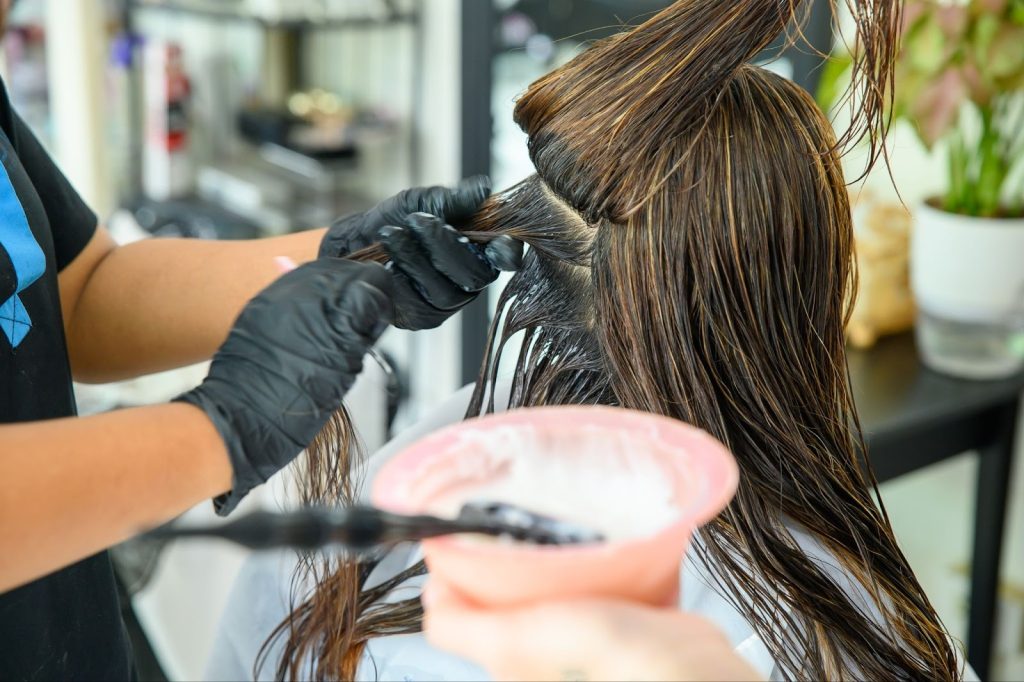
Best for: People who want to chemically straighten their hair at a structural level.
How long it lasts: It’s a permanent hair straightening solution.
Things to know: Chemical straightening comes with some risks: hair usually becomes weaker with repeated treatments. Plus, chemicals applied to previously treated hair can cause breakage.
3. Japanese Hair Straightening
How it works: This method (also called thermal reconditioning) changes your hair’s structure with the help of chemicals and heat. The process breaks the hair’s protein bonds, reshapes them under a hot iron, and seals the straightened structure with another chemical step.
Best for: People with the time and patience for an 8-hour session.
How long it lasts: Japanese hair straightening permanently restructures your hair, though new growth will still come in with its natural texture.
Things to know: Hair that has been heavily colored or chemically treated may not respond well. Aftercare is crucial: you should never forget about deep conditioning and sun protection. Also, avoid heat.
4. Hair Rebonding
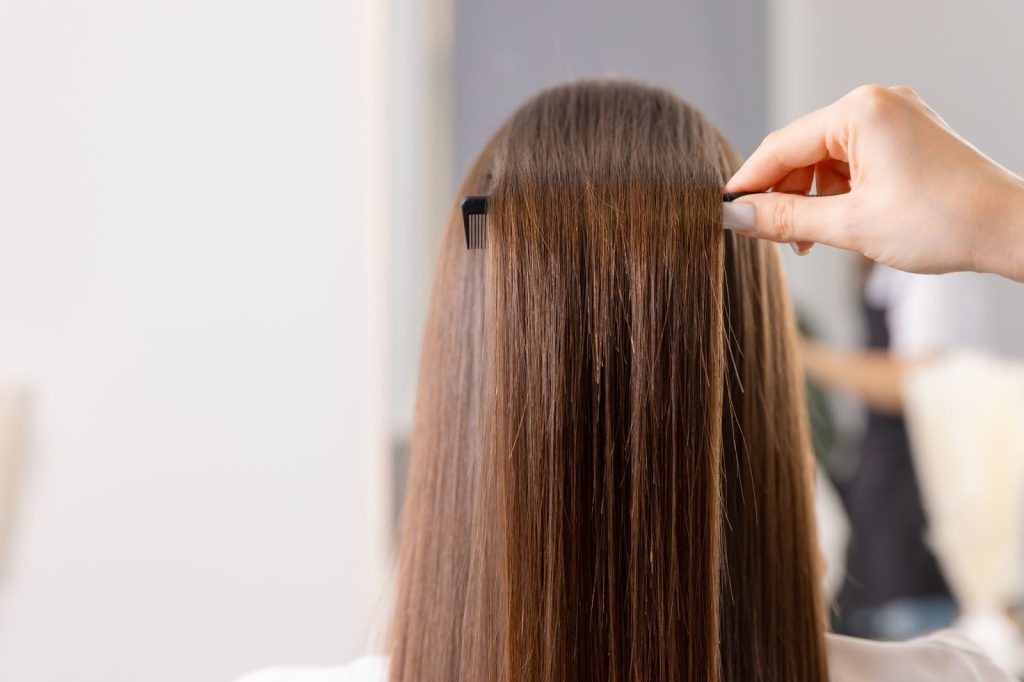
How it works: It uses chemicals to break natural hair bonds and then resets them with a neutralizer, creating permanently straightened hair.
Best for: People who are ready to commit to careful upkeep in exchange for sleek, straight hair.
How long it lasts: Hair rebonding creates permanently straightened hair.
Things to know: Hair can become more vulnerable to damage. If you’re ready to go all in, rebonding gives you sleek hair. Just be ready to put in the work to maintain it.
Which Permanent Hair Straightening Method Is Right for You?
Here’s a quick comparison of all four methods side by side:
| Method | How long it lasts | Key trade-off |
|---|---|---|
| Keratin treatment | Semi-permanent | Less long-lasting than permanent methods |
| Chemical straightening | Permanent | Risk of weakening with repeated use |
| Japanese hair straightening | Permanent | Up to an 8-hour session |
| Hair rebonding | Permanent | Requires high maintenance |
Cons of Hair Straightening
Even though permanent hair straightening can be transformative, it comes with some trade-offs. The chemicals used can weaken your hair strands, making them more prone to dryness, breakage, and split ends.
Plus, as hair grows, the contrast between treated and natural strands can create a mixed texture. As a result, you may need to spend more time styling.
The chemical fumes can also affect your health. The two studies below explain how.
One clinical review found that formaldehyde and its preservatives, which can be found in hair-straightening products, may cause allergic skin reactions. These reactions can be mild, widespread, or eczema-like, and the chemicals are sometimes hidden on labels. The good news is that allergy rates are declining in Europe due to stricter cosmetic regulations. Still, they remain high in the U.S., where exposure is more common.
Another large study suggests that using chemical hair straighteners during early adolescence (ages 10–13) may be linked to a higher risk of developing premenopausal breast cancer later in life.
In this study, researchers followed more than 47,000 women for about a decade and compared their childhood hair product use with breast cancer outcomes. As a result, they found that frequent use of chemical straighteners was associated with more than double the risk. Perms creating curls and waves also showed an increased risk.
In short, is hair straightening harmful? Well, it can be, especially if done frequently or with poor aftercare. Always consult a professional and make sure they can provide the proper ventilation during your hair straightening treatment.
Key Takeaways
So, can you get your hair permanently straightened? Absolutely—but it’s a decision worth thinking through. From keratin treatments to Japanese straightening and hair rebonding, each method has its perks, risks, and maintenance routines. Whether you want to fully commit or just dip your toe into the world of permanent hair straightening, understanding these treatments will help you make the best choice for your hair and health.


-
1.
Permanent waving and straightening of hair. (1987.) https://pubmed.ncbi.nlm.nih.gov/3608576/
-
2.
Contact allergy to and allergic contact dermatitis from formaldehyde and formaldehyde releasers: A clinical review and update. (2022.) https://onlinelibrary.wiley.com/doi/full/10.1111/cod.14089
-
3.
Adolescent use of hair dyes, straighteners and perms in relation to breast cancer risk. (2020.) https://onlinelibrary.wiley.com/doi/abs/10.1002/ijc.33413