Don’t Touch Them: A Guide to Sebaceous Filaments

Your guides through the skincare chaos
Before you squeeze, scrub, or reach for a pore strip—pump the brakes. Those small, grayish dots on your nose or chin that survive every cleanser aren’t what you think they are. They’re sebaceous filaments: a natural part of your skin that’s been there all along.
So before you declare war on your own pores, let’s answer a few common questions:
- What are sebaceous filaments, and why does your skin need them?
- Why do some people see them more than others?
- How are they different from blackheads?
- What can help make them less noticeable?
What Are Sebaceous Filaments?
Sebaceous filaments are tiny, tube-like structures that line the inside of your pores. They’ve been there since puberty, and their job is straightforward: to move sebum (the skin’s natural oil) from the sebaceous glands to the surface, keeping your skin moisturized.
Everyone has them, regardless of skin type or how thorough their skincare routine is. The only difference is how visible they are.
Where Do They Show Up?
The T-zone is where sebaceous filaments tend to stand out because that’s where oil glands are most active. We’re talking the tip of the nose, the forehead, the chin, and the cheeks (yes, the same places blackheads love to pop up). That said, oil glands exist all over the body, so sebaceous filaments can technically appear on your arms, chest, or even breasts.
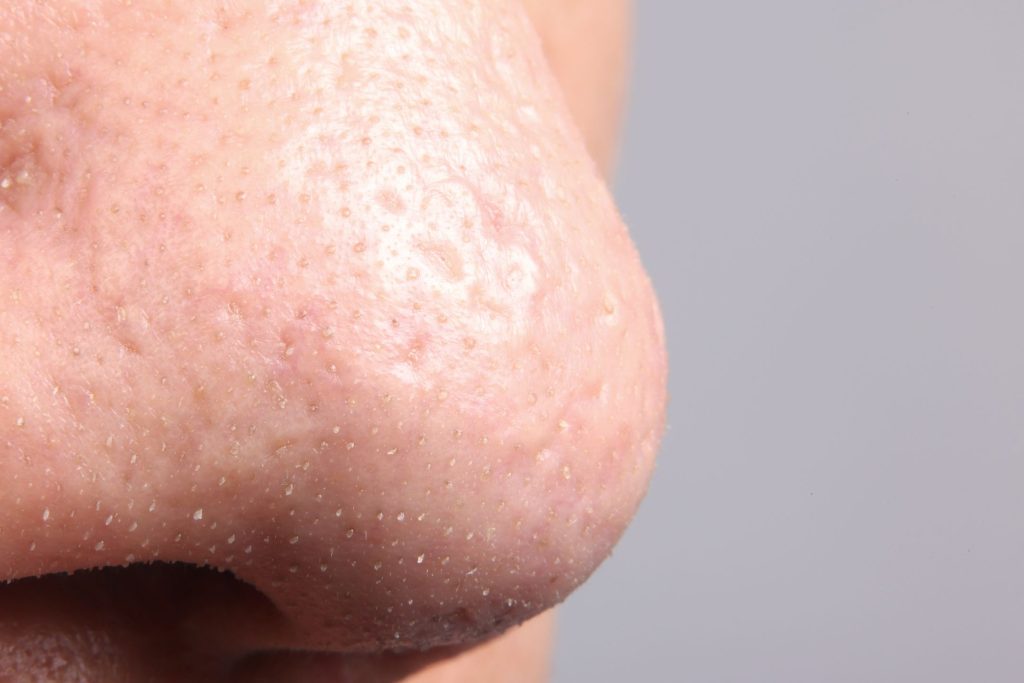
On the face, they typically show up as tiny, uniform dots. Their color ranges from light gray and sandy to yellowish or flesh-toned, but not the dark, obvious black of a true blackhead.
Unlike blackheads, sebaceous filaments are flat and evenly distributed rather than raised or scattered. This is what they look like on the face:
Sebaceous Filaments vs Blackheads
Sebaceous filaments and blackheads may look (annoyingly) similar, but they aren’t the same thing.
A blackhead is a type of acne. It forms when sebum, dead skin cells, and bacteria plug a pore and get exposed to air. The material oxidizes and turns black, putting the “black” in blackhead. They’re raised, irregular, and filled with a dark, waxy plug.
This is what they look like on the face:
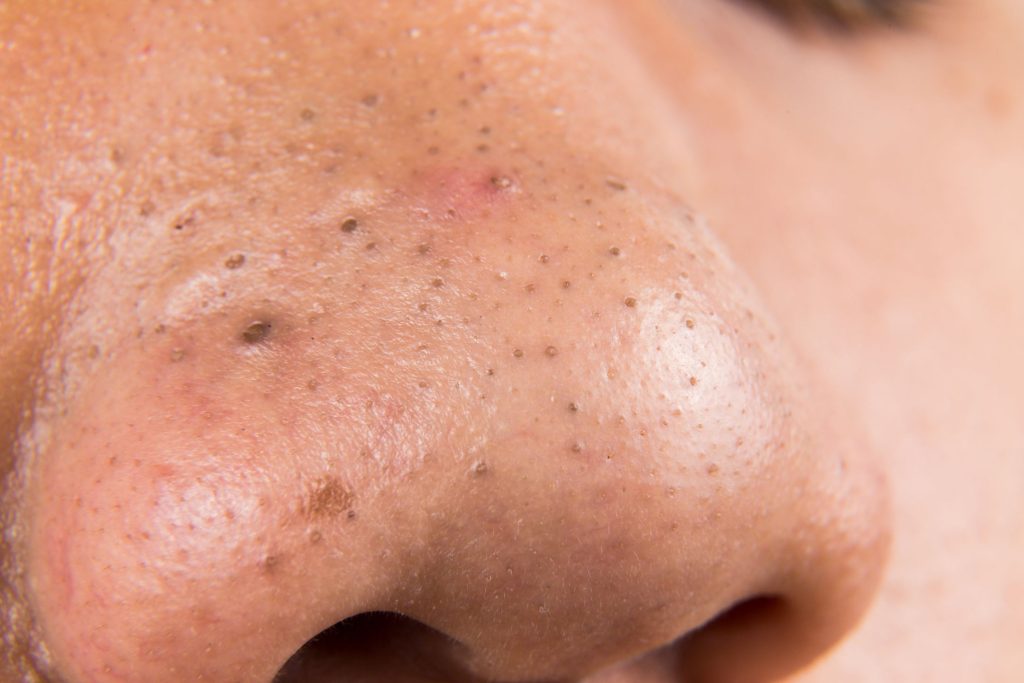
Sebaceous filaments, on the other hand, aren’t a skin condition. The pore stays open, oil moves through normally, and what you see on the surface is flat and pale—gray, sandy, or yellow.
Not sure which one you’re looking at?
Think back on the last time you squeezed one:
Squeeze a sebaceous filament → A thin, waxy, thread-like strand may come out (or nothing at all)
Squeeze a blackhead → A firm, dark plug pops out of the pore
Which brings us to an important point: you shouldn’t squeeze sebaceous filaments. Like, ever.
What If You Squeeze Them?
At best, a small amount of waxy oil or a thread-like strand comes out of the pore. At worst, nothing happens except irritation. Either way, the pore refills within around 30 days.
Squeezing also carries real risks: enlarged pores, scarring, and the spread of bacteria to surrounding skin.
The same goes for pore strips: you get a temporary visual result (along with the risk of irritation).
Why Do You See Them?
If yours seem particularly prominent lately, here’s what might be behind it.
1. It might be your age. Sebaceous glands grow larger around puberty, producing more oil and making filaments easier to spot. Later, in your 40s and 50s, skin loses elasticity and pores widen slightly, which puts filaments back in the spotlight.
2. It might be your skin type. Oily and combination skin produces more sebum, which fills pores more quickly. Hormonal shifts and chronic stress can also increase oil production, making filaments more apparent.

3. It might be your skincare habits. Harsh cleansers and over-washing strip the skin’s natural oil, prompting the sebaceous glands to produce more oil to compensate. The same goes for skipping SPF: UV exposure dries out the skin, triggers oil production, and can make filaments stand out more over time.
4. It might just be genetics. Some people naturally have larger pores and thicker hair follicles, both of which make sebaceous filaments more visible. If your mom had them, there’s a good chance you do, too.
How to Treat Sebaceous Filaments Right
Once and for all: you can’t permanently remove sebaceous filaments. But you can make them less noticeable with the right approach. Here’s what you can do:
🧼 Cleanse twice a day. Use a mild, non-stripping cleanser with lukewarm water. Harsh formulas can damage the skin barrier and trigger more oil production—the exact opposite of what you want.
💧 Moisturize. Yes, even if your skin is oily. A lightweight, non-comedogenic moisturizer keeps oil production stable. Skipping it can prompt your skin to produce more oil.

💡 Bring in salicylic acid. Salicylic acid is oil-soluble, which means it can penetrate pores and dissolve dead skin cells, preventing hair follicles from getting clogged.
🧽 Exfoliate, but gently. Glycolic acid is handy too. It removes dead skin cells from the surface and keeps pores from looking congested. Just don’t overdo it (and always read the label first).
☀️ Protect your skin from the sun. SPF helps you prevent your skin from drying out and going into oil overdrive, which in turn keeps sebaceous filaments from taking center stage.
📱 Scan products with OnSkin. The app lets you check formulas, compare their pros and cons, and find out whether a product is right for your skin before you buy it.
🙌 Keep your hands off your face. Touching transfers bacteria and oil.
👩⚕️ Get professional advice. If you’re not sure what you’re looking at, see a dermatologist. They can confirm the diagnosis and recommend a routine that actually works for your skin.
Key Takeaways
- Can you permanently get rid of sebaceous filaments? No—they’re a built-in part of your skin. Proper skin care can make them less visible, but they won’t disappear.
- Is it a hygiene issue? Sebaceous filaments have nothing to do with how clean your skin is; everyone has them. They just tend to stand out more on oily or combination skin, where sebum production is higher.
- Are they the same as blackheads? No. Blackheads are a type of acne and get their dark color from oxidation. Sebaceous filaments, in turn, are flat, pale, and part of normal skin function.
- Does squeezing help? Never. The pore refills within about 30 days anyway, but you risk irritation, scars, and pores that look bigger than before.
- What actually works? Start with the basics—gentle cleansing, mild exfoliation, and daily SPF. If you want to add an active, try salicylic acid: it’s oil-soluble and works inside the pore, where the buildup actually is.
- When should you see a dermatologist? When you’re unsure what you’re dealing with or your current routine is making things worse.


-
1.
Sebaceous Filaments—Causes, function, prevention, and treatment. https://www.icliniq.com/articles/skin-care/sebaceous-filaments
-
2.
Sebaceous filaments. (1976.) https://pubmed.ncbi.nlm.nih.gov/130839/
-
3.
Sebaceous filaments. (2023.) https://my.clevelandclinic.org/health/diseases/24571-sebaceous-filaments

You May Be Interested In
View All