
How to Get Rid of Turkey Neck: What Works And What Doesn’t

Your guides through the skincare chaos

If loose skin under the chin, also known as “turkey neck,” bothers you, you’re definitely not alone. Noticing new lines or a little sagging where there used to be none would make anyone wonder how to get rid of a turkey neck in a way that actually works.
While not usually an indicator of any worrisome changes in your health, saggy neck skin can affect your self-esteem, and that makes it an issue worth addressing.
Let’s talk about causes, prevention, and what practical, proven steps you can take right at home.
What causes turkey neck?
Turkey neck happens when the key supportive elements in your skin—collagen and elastin—break down as you get older and under the influence of sun exposure, genetics, or even weight changes. While most of these processes are unavoidable, they can be slowed down.

Think of it like taking care of your favorite sweater. The fabric can—and probably will—stretch over time, but if you take steps to prevent that, you can help the sweater retain its shape for much longer. The same applies to figuring out how to get rid of a turkey neck—you just need a game plan to get you over the finish line.
But first, let’s talk about the main culprits that cause that sagging chin skin.
Culprit #1: Sun exposure
Few things break down collagen quite as fast as sun exposure. Consistent UVA exposure can negatively affect the skin’s structural support by damaging the cells that maintain collagen, which can then lead to premature skin aging and, you got it, a saggy neck.
Culprit #2: Genetics
Your natural levels of collagen and elastin are preprogrammed, for better or for worse. The same goes for your personal timeline for cellular repair and renewal. Some people’s skin cells are simply more prone to breaking down over time.

Culprit #3: Weight changes
If on your journey to understanding how to get rid of a turkey neck, you find yourself typing “Will losing weight help turkey neck?” in the search bar, here’s your answer: not necessarily. Both weight gain and weight loss can stretch the skin, so it’s better to avoid rapid weight changes altogether.
How to prevent turkey neck
Sun protection, a smart skincare routine, and a healthy diet—these are the three keys to keeping your neck skin firm. You don’t need to change your daily habits drastically—a few minor tweaks will do the trick.
Sun protection
This is a non-negotiable. Sun damage is the main external cause of premature skin aging and sagging. But if you use sunscreen daily, you protect the existing collagen in your skin.
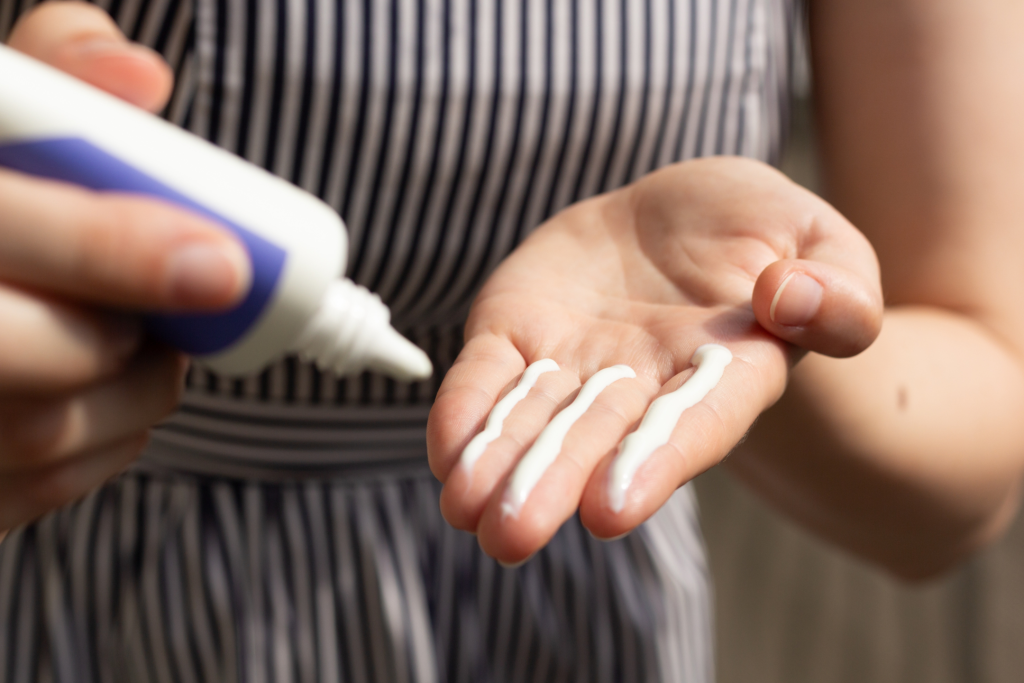
Bonus tip: Remember the three-finger rule. When applying sunscreen, squeeze out enough for three fingertips. This ensures you’re using enough product to be effective.
Smart skincare routine
Every morning and night, remember to extend your daily care all the way down to your chest. The skin there needs the good stuff you put on your face just as much.
Key ingredients to look for include:
- Peptides to help support collagen.
- Antioxidants (like vitamin C) to fight environmental stressors.
- Hyaluronic acid for hydration.
- Gentle retinol to encourage cell renewal (introduce slowly!).
Healthy diet
A balanced diet doesn’t have to be bland. All you need to remember is to hydrate and include colorful fruits, vegetables, and lean proteins to keep wrinkles under the chin at bay.
Bonus tip: Avoiding smoking and excessive alcohol intake will do wonders for your skin’s elasticity.
How to fix turkey neck
A consistent morning and evening skincare routine is your path to success. If you want to know how to get rid of a turkey neck, you need to use the right products in the right way, every single day.

Here’s your straightforward step-by-step guide.
Morning (takes 2 minutes)
- Cleanse. Gently wash your neck with your facial cleanser and lukewarm water.
- Treat. While skin is damp, apply an antioxidant serum (like vitamin C) to your neck.
- Protect. Apply your facial moisturizer, followed by a generous layer of sunscreen.
Bonus tip: If your skin is extra dry, try skipping facial cleanser in the morning and just using water for a few weeks. Some drier skin types do well with only cleansing in the evening.
Evening (takes 3 minutes)
- Cleanse. Remove the day’s sunscreen, sweat, and grime.
- Treat. Apply your night serum or treatment (like a peptide complex or gentle retinol).
- Moisturize and massage. Apply your night cream. Then, using the backs of your knuckles, gently stroke upward from your collarbone to your jawline 10 times on each side. Finish by gently patting along your jawline.
That’s it! You only need 5 minutes each day to take the first step to get rid of that turkey neck. However, if you want to show your skin a little extra love, there’s something else you can do.
Take an extra step (if you want)
This is completely optional! Once a week, treat your neck to a hydrating, soothing DIY mask. The recipe below uses simple ingredients that you most likely already have in your house to plump and refresh your skin.
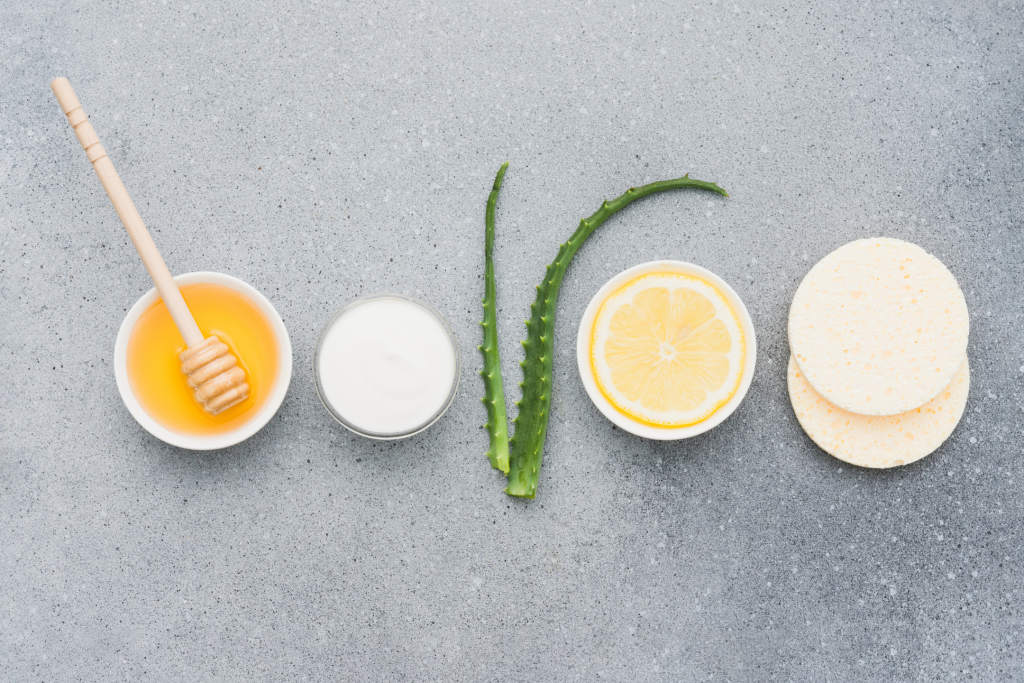
Soothing DIY neck mask recipe
Ingredients: 1 tablespoon plain Greek yogurt, 1 teaspoon raw honey, and ½ teaspoon aloe vera gel.
How to make it:
- Mix all ingredients in a small bowl until you achieve a smooth consistency.
- Cleanse your skin, then apply the mask in a thick layer to your neck and lower face.
- Relax for 10–15 minutes.
- Rinse thoroughly with cool water and gently pat dry.
- Follow with your regular serum and moisturizer.
Why this can help: Yogurt contains lactic acid for gentle exfoliation, honey is a natural humectant and antioxidant, and aloe vera soothes and hydrates.
Try a 5-minute neck-lift massage
Another way to show your neck some love is by gently massaging the area. Here’s a quick, step-by-step guide to a highly effective (and relaxing!) daily massage.

Step 1: (30 seconds)
Apply your favorite facial oil or a rich neck cream so your hands glide smoothly.
Step 2: (1 minute)
Tilt your head back and look up. Using your thumb and forefinger, gently pinch the vertical muscle bands that run down your neck. Starting at the top near your jaw, slowly “walk” your pinched fingers down toward your collarbone, sweeping outward at the end. Repeat 3 times on each side.
Step 3: (1.5 minutes)
With flat hands and light pressure, sweep from the center of your chin outward along your jawline toward your ears. Then glide down the sides of your neck to your collarbone. Repeat 5 times.
Step 4: (1 minute)
Make soft fists and use your knuckles to gently, but firmly, rake upward along the front of your neck, from collarbone to chin. This stimulates circulation and encourages muscle memory upward.
Step 5: (1 minute)
Using the backs of your fingers, lightly tap all over your neck and décolletage for 30 seconds. Finish by placing one hand on your upper chest and one on your lower neck, holding for 30 seconds to signal relaxation and reset the area.
Step 6: (30 seconds)
Apply a firming peptide or gentle retinol cream in upward-sweeping motions.
When to chat with a doctor
If you’ve been consistent with your at-home care for several months and now want to look into alternative turkey neck treatments, having a conversation with a dermatologist is a natural next step. They can assess your unique situation and provide personalized, professional guidance.

Key takeaways
- Protect from the sun: Daily sunscreen is your most trusted tool against loose skin under the chin.
- Nourish consistently: Extend your facial skincare to your neck every single time.
- Hydrate inside and out: Drink plenty of water and use hydrating products with ingredients like hyaluronic acid.
- Be patient: Progress in skin care is measured in weeks and months, not days. Consistency always wins.
- Seek personalized advice: If you feel like at-home care isn’t enough, booking a consultation with a skincare professional can provide you with more options and tailored advice.



FAQ
-
Where do I start with OnSkin?
Download the app and think of a product you’d like to know more about. Then, go to the main screen and choose how you’d like to get the info —by manually looking it up in the search bar, by scanning its barcode, or by simply taking a picture of the packaging. Once you’ve done any of these, you can see how safe the product is and if it suits your skin or hair (if this analysis is available).
-
What is Safety Rating, and how is it calculated?
In OnSkin, we base product rates on ingredients. Each is closely studied by our medical team and then evaluated. This way, each product gets a score from 0 to 100, with 100 as the safest level.
Safety Levels
- Excellent (76–100)
- Good (51–75)
- Not great (26–50)
- Bad (0–25)
These scores are backed by the latest scientific studies. You can find links to the resources we’ve used on each ingredient page. To assess the safety of product ingredients, we evaluate them according to the following parameters/criteria
- Endocrine disruption risk / Reproductive toxicity
Indicates the probability of mimicking, blocking, or interfering with the body hormones.
- Сarcinogenicity
Measures the potential risk of inducing cancer.
- Allergy risk
Estimates the probability of an allergic reaction.
- High concentration alert
Determines the risk of being unsafe in certain amounts.
-
What is Skin Match?
Based on the info you input about your skin type, age, skin care goal, and other “settings,” OnSkin checks how well a product is tailored to your unique skin needs — it’s basically like a dermatologist helping you find the right products, minus the fees and the long wait. The product you’re checking might be labeled as It’s a match!, Hit-or-miss, or Not a match for you. The app also detects ingredient groups such as Anti-acne, Anti-inflammatory, Moisturizes, May be drying, Comedogenic, and others — by tapping one, you see exactly what ingredients from this or that group are in the product.
-
I seem to have a problem with using the app. Who should I contact?
Please reach out to us at [email protected], and we’ll carefully look into your issue. Your ideas for improving the app are also very welcome!
-
Do you have an Android version?
Not yet! Hey Android users, we hear you, and we're thinking about making an Android version, but we haven't started the development yet.

It’s on the way to your inbox.
Don’t forget to check your spam folder!