Struggling with Dry Hair? Here’s How to Fix It

Your guides through the skincare chaos
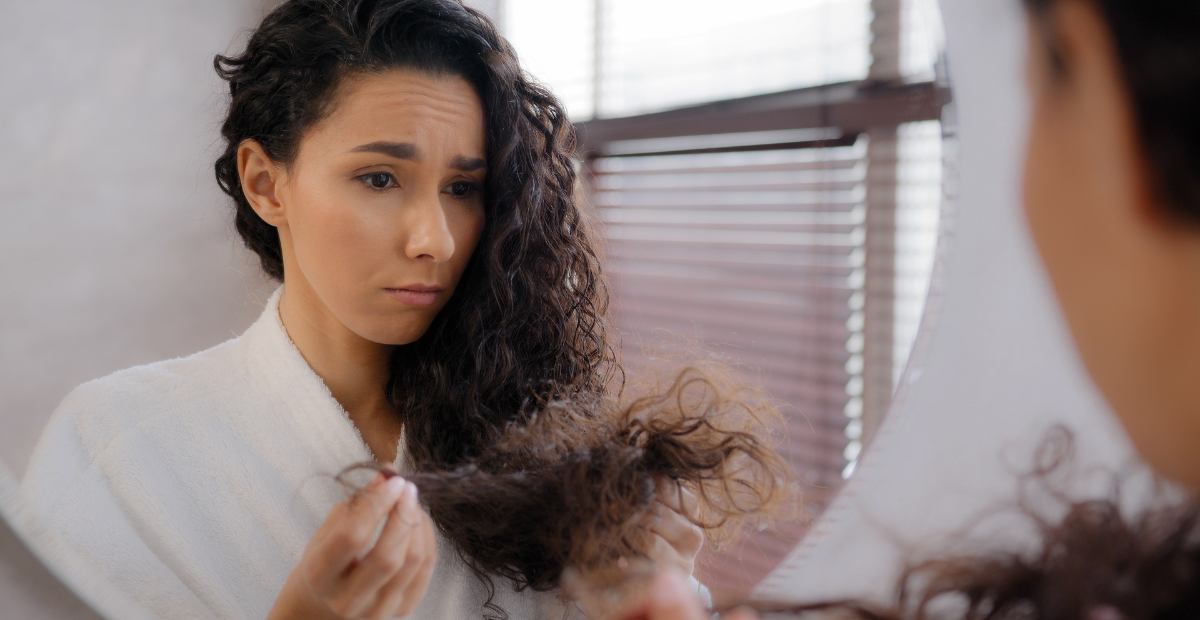
If your hair feels dry and brittle, you’re not alone. To fight this common issue, you’ll need to know what’s really behind it, and more importantly, what you can do to make it feel strong and healthy again. Are you ready to help your hair feel strong again? Let’s start!
What Is Dry Hair?
As it comes from its name, dry hair is a condition when it lacks moisture.
If you’d like to go into detail, your hair is made up of three layers. In healthy hair, the natural oils found in the outer layer safeguard the inner layers, ensuring it remains smooth and shiny. However, when hair becomes dry, the outer layer deteriorates, making it look dull and damaged.
Why Does It Become Dry?
There are two main reasons why your hair can become dry.
Climate conditions.
A dry, hot, and windy climate can steal your hair’s natural moisture and make it brittle. Spending much time in the sun, especially without protection, can also dehydrate your hair.

Life habits.
Frequent washing of your hair with harsh products can also deplete natural oils, resulting in dryness and brittleness. Moreover, it can disrupt the scalp’s natural balance, causing irritation, excessive oil production as the scalp tries to compensate for lost moisture, or even dandruff.
Frequent swimming in pools exposes your hair to chlorine. Experts confirm that it removes natural oils out of your hair, making it dry and unhealthy.
Different electrical appliances can also be harmful to your hair. It’s perfectly fine (in contrast to harsh towel drying) to blow-dry your hair after washing it, but still there are a couple of things to remember. The hotter the temperature, the more damage your hair can get. You might be surprised, but scientists have found that leaving hair wet for over two hours can also be harmful due to damage to the cell membrane complex. The reason is that prolonged water exposure weakens the structure of the hair.
Chemicals. Lightening your hair by more than three shades requires stronger peroxide, leading to increased damage. Peroxide removes melanin (which is in charge of the color) and damages the hair structure. This leads to protein breakdown and eventually makes the hair fragile. To cut a long story short, the more you bleach, the worse the damage.
How to Treat Dry Hair
The best advice is to see a good dermatologist. A specialist will check your hair and recommend specific treatment if needed.
For your daily routine, stick to a mild shampoo suitable for your hair type. While sulfates are used in literally every hair product to create foam and enhance cleansing, they have drawbacks as well. However, the potential negative effects depend on different factors such as concentration, for instance. We’ve made a full guide on sulfates here, if you want to know more about them.
According to the American Academy of Dermatology, your hair will benefit from conditioning right after washing. If you have fine hair, apply it only to the ends. When it’s dry, use the conditioner throughout the entire length, avoiding the scalp.
If you don’t want to or have no time to read guides on the pros and cons of sulfates or other ingredients, you can check them with the OnSkin app. Apart from analyzing the safety of components, it’ll also tell you whether your hair matches this or that product. Just take a picture of the package or the barcode, and the app will do the job.
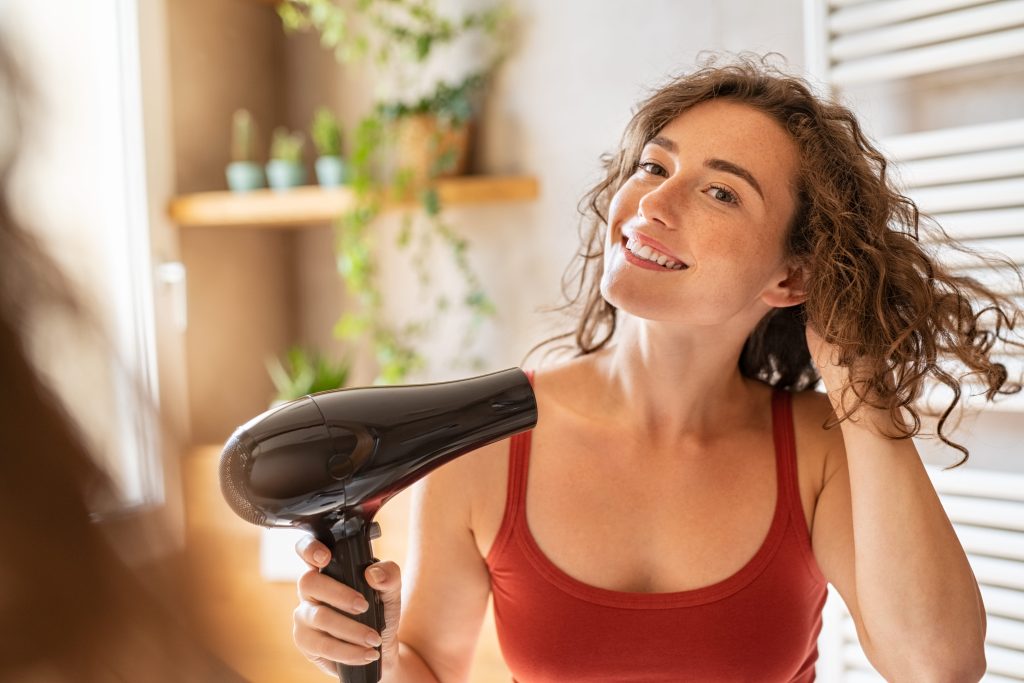
When drying, it’s better to keep the dryer about 15 cm away from your head and move it constantly. The temperature also matters. Scientists say the worst damage happens at 95℃ (~200°F).
And yep, you can’t control the weather, but you can protect your hair from the sun. Don’t forget to wear a hat and use UV-protective hair sprays, especially on hot sunny days. If you often swim in the salty sea or ocean, rinse your hair with fresh water at least after you dive in. It’ll be also great to do that before swimming.
If you prefer swimming in the pool, don’t forget to wear a silicone hat. As with salty water, it’s better to rinse the hair with fresh lukewarm water to wash off the chlorine. By the way, we’ve recently published a full guide on chlorine—a must for every swimmer.
Try to match the shade more or less when you dye your hair. It’s better to stick to a color within three shades of your natural one. As you remember, the less peroxide, the better.
P.S.: What Else to Read About Hair Care
Here are a few articles that can help you learn more about the hair care process and how to adjust it.
A guide to scalp exfoliation: Check out the benefits, tips, and the best exfoliants for a healthy, flake-free scalp and stronger strands.
Also, don’t miss the Best Scalp Massager article. You’ll explore the benefits and potential drawbacks of these devices in haircare. The guide also has tips on choosing the best tool and proper techniques.
Dive into the science of how your hair grows and why it may fall out. There are also a few tips on ingredients that can promote growth.
And these are the top 5 myths about sulfates in hair products. Do they cause cancer? Do they change dyed hair color? Is the “no-poo” method a way out? And are these ingredients bad at all? Debunk the myths about sulfates with us.
Like sulfates, silicones are another ingredient with a controversial reputation that is frequently used in hair care products. However, they can be very helpful if you know which type suits you. Here are more details about it.
You can also check out what daily habits damage your hair. Spoiler: there are seven of them.
Having an issue with split ends? Find out how to get rid of them.
For a titbit, there’s also a comprehensive guide on why your hair can turn green after swimming in a pool, along with several recommendations on how to fix it.
And there’s more to come:)


-
1.
Hair shaft damage from heat and drying time of hair dryer. (2011). https://pmc.ncbi.nlm.nih.gov/articles/PMC3229938/
-
2.
The physical and chemical disruption of human hair after bleaching - studies by transmission electron microscopy and redox proteomics. (2018). https://pubmed.ncbi.nlm.nih.gov/30229956/

You May Be Interested In
View All