Vitamin E Benefits for Your Skin: Are There Any?

Your guides through the skincare chaos

Vitamin E is a common ingredient in skincare products, but its inclusion sometimes raises questions. Does this vitamin (that actually has eight forms) truly benefit your skin, or is it just a marketing story? While the word vitamin might imply health benefits, the reality is grounded in scientific research. In this article, we tried to gather everything you need to know about vitamin E in skincare to assist you in making a knowledgeable choice.
What Is Vitamin E?
Vitamin E is a fat-soluble ingredient, meaning it dissolves in fats and oils. It’s not a single substance but exists in eight forms, including alpha-, beta-, gamma-, and delta-tocotrienol, as well as alpha-, beta-, gamma-, and delta-tocopherol.
The most commonly used is alpha-tocopherol. For simplicity, we’ll refer to it as vitamin E, specifying the exact form when necessary.
What Are the Benefits of Vitamin E?
The greatest advantage of vitamin E is its antioxidant property. In simple terms, antioxidants are molecules that safeguard your body by counteracting free radicals. Free radicals are harmful byproducts created by cells during the digestion of food and in response to environmental influences. Pollution, UV rays, or cigarette smoke can also activate their production. An excess of free radicals can lead to oxidative stress, which is linked to inflammation, fine lines, wrinkles, uneven skin tone, and dark spots. Several health issues, including heart disease, cancer, arthritis, immune disorders, and more are also on the list.
That said, while vitamin E’s antioxidant properties are impressive, it’s not a cure-all solution. But let’s break it down step by step.
Where to Find Vitamin E
You can find vitamin E in food and supplements. According to scientists, an average American consumes about 14mg of vitamin E daily.
The best sources of vitamin E are vegetable oils. While cereal products and eggs also contain this ingredient, they provide smaller amounts. As far as vegetables and animal products are concerned, their level of vitamin E is minimal.
The ingredient has also been added to skincare products for more than half a century already. Among them, for instance, are serums, moisturizers, and face oils.
Why Is Vitamin E Used in Skincare?
Vitamin E’s stability (its ability to stay effective over time) depends on its form. Though many skincare products have vitamin E in their formula, they often lose their quality after being opened because air and light cause them to degrade. Vitamin C, by the way, shares the same fate.
However, if a product contains a stable level of vitamin E, it can help protect the skin from UV damage and prevent aging caused by sunlight.
How Exactly Is It Effective?
According to research, vitamin E shows significant improvement in condition of patients with atopic dermatitis compared to a placebo. These findings suggest that the ingredient may help manage this condition by reducing immunoglobulin levels and easing symptoms.
Another study carried out in 1975 found that vitamin E improved the condition of three patients with a rare skin disorder called Hailey–Hailey disease. While it’s unclear how exactly the ingredient works in this case, it’s believed that its antioxidant properties protect cell membranes from damage and may stop the formation of harmful autoimmune antibodies.
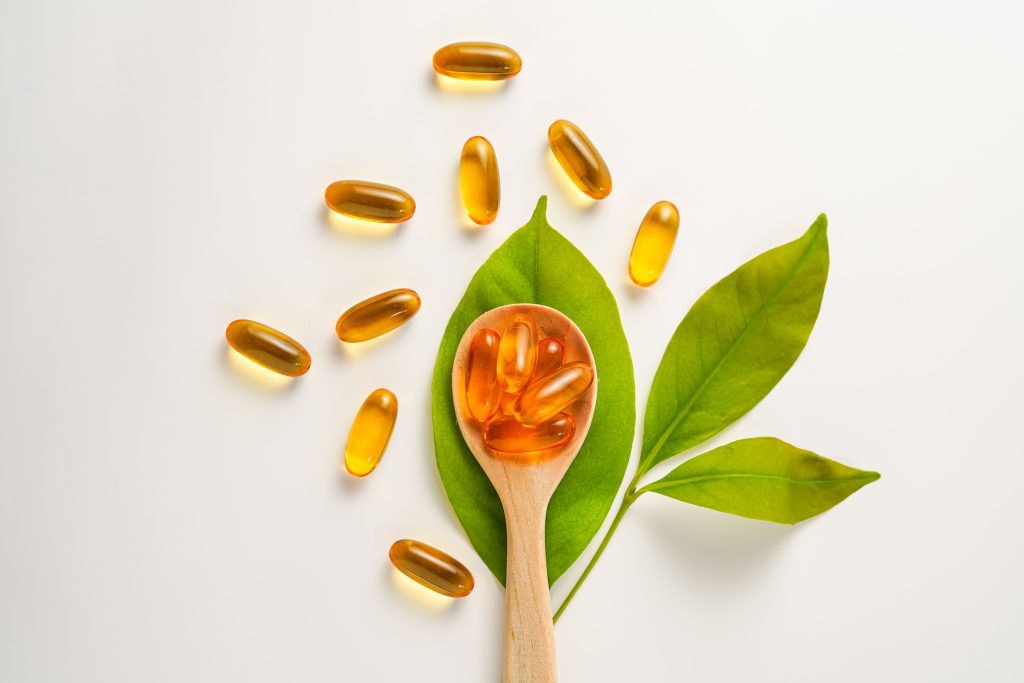
In topical skincare, vitamin E is commonly utilized because of its antioxidant effects that shield the skin from damage. Scientists say that in general anti-aging creams on the market contain 0.5%—1% vitamin E. To be more precise, according to the Cosmetic Ingredient Review, the concentration of tocopherol in leave-on products (e.g. lotions, creams, antiperspirants) is between 0.000003% and 5.4%, while rinse-off products contain 0.0000009-3%.
While vitamin E is commonly used to treat burns, surgical scars, and wounds, there’s insufficient scientific evidence to confirm its effectiveness.
Studies on animals and humans, as well as lab research, show that vitamin E is also effective in protecting the skin against UV damage. Additionally, a gel containing a mix of phytonadione (a form of vitamin K), retinol, vitamin C, and vitamin E has proven effective in reducing dark circles under the eyes and wrinkles.
Vitamin E in Hair Care
A study found that taking tocotrienol capsules, a form of vitamin E, increased hair growth in patients with hair loss compared to those taking a placebo. This effect may be due to strong antioxidant properties that tocotrienol has.
To ensure you’re using the most effective products for your requirements, you can try the OnSkin app. Simply take a picture of the product or its barcode, and the app will analyze it to determine if it’s suitable for your hair type.
What Makes Vitamin E More Effective
Vitamin C also has antioxidant properties, which in combination with vitamin E, makes it a strong weapon in the fight against UV exposure.
When ferulic acid, a natural plant antioxidant, is added to a mixture of vitamin C (15% l-ascorbic acid) and vitamin E (1% alpha-tocopherol), it helps these vitamins stay stable longer. This combination also makes the vitamins twice as good at protecting your skin from damage caused by the sun.
So, Are There Any Benefits?
There’s no doubt that vitamin E offers benefits for the skin, particularly due to its antioxidant properties, which help combat free radicals and reduce UV damage. While it may not be a miracle cure for all skin issues, scientists say it can help with certain skin conditions like, for instance, atopic dermatitis and Hailey–Hailey disease, as well as with hair growth.
For optimal results, combining vitamin E with other antioxidants like vitamin C and ferulic acid can enhance its effectiveness and make it more stable. It can be a beneficial ingredient in moisturizers, serums, and hair care products when selected with care. Apps like OnSkin make it easy to find products perfectly suited to your individual needs.